



Hamas terrorists have finally won the stupid prize for playing the stupid game. That stupid prize is to surrender as U.S. President Donald Trump revealed a 20-point plan after nearly two grueling years of war between Israel and Hamas. European and Middle Eastern leaders have welcomed the U.S. peace plan for Gaza, as Trump warned Hamas to accept it.
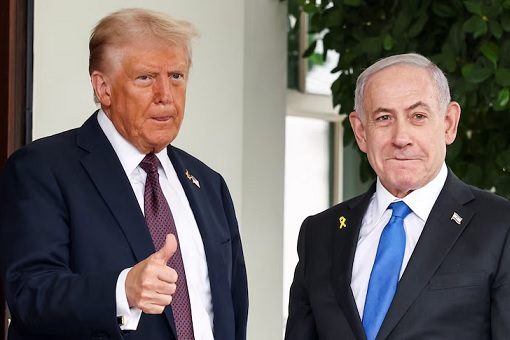
You know Hamas is both screwed and game-over when Israeli Prime Minister Benjamin Netanyahu not only agreed to the terms to end the conflict, but was standing next to Trump at the White House when the U.S. president laid out his plan. More importantly, Hamas officials were given the 20-point plan only after everything had been agreed upon between Trump and Bibi.
Essentially, Hamas was merely being informed after a decision had been made, and was not involved in negotiation, let alone given any opportunity to speak out – take it or continue to be slaughtered. Anyway, throughout history or wars, there hasn’t been a single case where a loser could dictate terms to end a war which were favourable to them. A beggar cannot be a chooser.
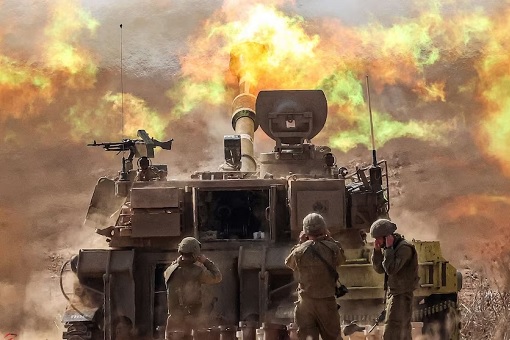
Even though both sides are tired of the war, Israel has all the cards to play. While two-thirds of Israelis want the war to end, and though polling of Palestinians is difficult, they clearly want the devastation and suffering in Gaza to stop, too. Israeli military strikes have turned most of Gaza to rubble – buildings are reduced to rubble, roadways pitted with craters, and entire neighbourhoods flattened.
Israel agreeing to end the war is already a victory for the Jewish state. Since the war started, which was sparked by the October 7 massacre that left 1,200 Israelis dead and some 250 hostages taken by Hamas terrorists, Israel has been accused of aggression and brutality – even genocide. Now that Israel has agreed to end the war, Hamas will get all the blame if the peace plan fails.
The plan, agreed by Trump and Netanyahu, proposes an immediate end to fighting, the release within 72 hours of 20 living Israeli hostages held by Hamas as well as the remains of the more than two dozen hostages who are believed to be dead – in exchange for hundreds of detained Gazans (For every Israeli hostage released, Israel will release 15 Gazans). Crucially, the plan also says Hamas will have no role in governing Gaza.

If Hamas doesn’t accept, or if the plan falls apart, Trump said – “Israel would have my full backing to finish the job of destroying the threat of Hamas.” Netanyahu, meanwhile, said Israel “will finish the job” if Hamas rejected the plan or did not follow through. In short, Hamas is given no choice but to surrender, regardless of whether a Palestinian state could be formed or Israeli forces are withdrawn.
The best part is, Israel’s Arab neighbours will have to do all the heavy lifting of getting Hamas to comply with President Trump’s 20-point plan to end the fighting in Gaza. As long as the Arab world is unable to close the deal, Netanyahu has the excuse to continue fighting Hamas and bombing Gaza, and fend off further international condemnation. The burden has shifted to the Arab nations.
The U.S.-Israel brilliant chess piece movement has turned the tables against Hamas and the Arabs. Criticism from Western allies of Israel, which was largely around Netanyahu’s refusal to end the war, has now changed – the Arab countries have to deliver. Over the last few days, Qatar and Turkey have tried to pressure Hamas leaders, warning them that this is their last chance to end the war in Gaza.

Hamas was told – even threatened – that if the group rejects the deal, the Gulf states will no longer be able to continue providing them with political or diplomatic support. Hamas militants can receive amnesty if they give up their weapons – the biggest “red-line” for the terrorist organization. The terror group can only complain that the plan is a complete surrender that leaves Palestinians without a credible path to statehood.
The Trump plan poses a dilemma for the Arab nations. It calls for the U.S. to work with Arab states and international partners to send a “stabilization force” to Gaza and names Jordan and Egypt specifically as places to train a Palestinian police force in Gaza. But sending Arab troops into Gaza will be politically risky, potentially making them appear as collaborators or occupiers.
Egypt, for example, is refusing to send any troops into Gaza until there is a full Israeli military withdrawal, which is a non-starter from the beginning. Make no mistake – Israeli forces will never withdraw till Hamas is defeated. Since the early days of the war, Egypt has expressed its concerns that the Israeli military operation would push Palestinians to leave Gaza en masse, triggering a massive refugee crisis in Egpyt.

Domestically, the last thing that the Egyptians or Jordanians want to be seen as doing is functioning as a security apparatus on behalf of the Israeli military. However, that’s what Israel and the U.S. wanted – forcing Arab states to take on almost all the big challenges, while allowing the Israelis to watch with popcorn and to decide if everything was done satisfactory according to their check-list.
Still, in a joint statement, the foreign ministers of the United Arab Emirates, Saudi Arabia, Qatar, Egypt, Jordan, Turkey, Indonesia, and Pakistan said they welcomed Trump’s “leadership and his sincere efforts to end the war in Gaza”. They said they were ready to engage with the U.S. to finalise and implement the agreement, which they said should lead to a “two-state solution” – a merger of Gaza and West Bank in a Palestinian state.
Netanyahu’s ability to squeeze out of the Arabs significant concessions, including the upfront release of all 48 hostages – both living and dead – being held by Hamas, is arguably the biggest victory that could see the Israeli prime minister ride a wave of approval to re-election. Hamas is absolutely doomed – damn if it accepts the deal, damn if it rejects the deal.

To ensure Israeli forces will remain in control of Gaza long after Hamas surrenders, Israel will maintain a buffer zone, including a key corridor that runs along the border between Gaza and Egypt. PM Netanyahu’s statement that the peace plan would allow the Israel Defense Forces (IDF) to stay in Gaza – contrary to the text of the proposal published by the White House – indicates the peace plan is not a done deal.
As a sweetener, Trump said – “No one will be forced to leave Gaza, and those who wish to leave will be free to do so and free to return.” Netanyahu also had to make some concessions – he had to give up on the Jewish settlement of Gaza, which would expel Palestinians from the enclave, and acknowledged the right of Palestinians to sovereignty and statehood.
The Trump plan includes a role for the Palestinian Authority – the Hamas rival that oversees parts of the West Bank – something Netanyahu swore he wouldn’t allow to happen. In a video statement shortly after Trump’s revelation, Netanyahu reinstated his longstanding opposition to a Palestinian state. “It’s not written in the agreement. We said we would strongly oppose a Palestinian state,” – he said.
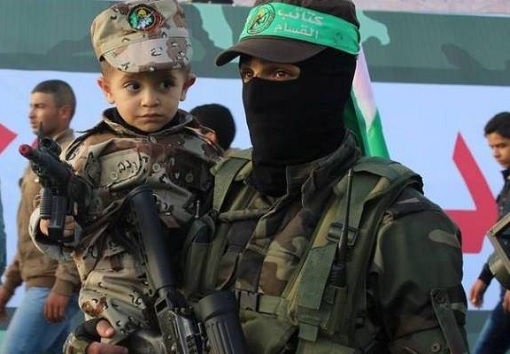
But the zero trust between Israel and Hamas is already a big risk both sides could accuse the other of breaking their promises. It’s hard to believe that Hamas, being asked to give up all the remaining Israeli hostages it holds and all of its weapons at the same time, would obediently comply. There’s no guarantee that Israel will not use the opportunity to hunt down Hamas leaders even after they are given amnesty.
For Israel, there’s no way to guarantee Hamas terrorists will not disguise themselves as civilians and continue to threaten the security of the Jewish state. It will find excuses to bomb Hamas even if the terror group agrees – or pretends – to surrender. Therefore, Hamas may decide the risks of accepting the deal outweigh the potential benefits, despite its offer of amnesty for Hamas fighters who lay down their arms.
Presumably there will be new elections to install a new leader in place of current President Mahmoud Abbas, who is in charge of the West Bank but lost to the radical Islamic group Hamas in the 2006 election in Gaza, the ideology of Hamas could see a new pro-Hamas leadership, leading to security problems all over again. In addition, the details of the civil authority that would oversee the reconstruction of Gaza are very unclear.
The lack of trust in Mahmoud Abbas’s leadership saw how the Israeli government gave final approval to a controversial plan to build a new settlement that would effectively divide the West Bank in two last month. Within Israel, the hardline right-wing members of Netanyahu’s cabinet, Bezalel Smotrich and Itamar Ben-Gvir, have said they will not accept anything less than the complete destruction and elimination of Hamas.
Other Articles That May Interest You …
- No More Safe Havens – Israel’s Airstrike In Qatar Sends New Message To Countries Harbouring Hamas Terrorist
- Paying The Price For Hamas Attacks – How Trump Misled Iran Before Israel Sends 200 Jets To Attack
- Where’s Hero Anwar? – Palestinians Staged Largest Anti-Hamas Protests, Only To Be Tortured & Executed
- Ran Out Of Luck And Place To Hide – Here’s How Israel Trainee Squad Accidentally Killed Hamas Mastermind Sinwar
- Live By The Sword, Die By The Sword – Anwar Madly Angry After BFF Hamas Terrorist Leader Haniyeh Assassinated
- Playing A Dangerous Game – Here’s Why Facebook Removes News Of PM Anwar Meeting With Hamas Terrorists
- Hamas Is Game Over – How The Terror Group Miscalculated, Betrayed, Abandoned And Made More Mistakes
- Careful What You Wish For – U.S. May Slap Economic Sanction On Malaysia For Supporting & Training Hamas Terrorists
- Human Shields – How Hamas Cleverly Wins Propaganda War, But Was Stunned By “Fire Power” Unleashed By Israel
- Told You So!! – Congrats To Anwar For Radicalizing School Kids As Potential Hamas Terrorists Playing With Guns
- An Eye For An Eye!!! – No One Can Stop Israel From Reducing Gaza To Rubble And Erase Hamas Terrorists

|
|
September 30th, 2025 by financetwitter
|


|

|

|

|

|

|

























Comments
Add your comment now.
Leave a Reply