



Many politicians and defence analysts believe a China’s invasion of Taiwan is a foregone conclusion. That’s because they need a potential threat to justify the defence policy decisions and regular budget increases. Fearmongers like John Bolton, who used to be in charge of U.S. national security policy, would love to see China attack Taiwan so that U.S. defence contractors could make money.
However, some analysts think Beijing is unlikely to invade Taiwan as it is politically and militarily dangerous for the leadership of Xi Jinping, ranging from economic disaster to military operational nightmare. A military campaign to conquer Taiwan would be the largest, most complex military operation in history – largely due to the island’s challenging terrain.
Of course, the simplistic – and the most idiotic – reason why China will never invade Taiwan is based on Western propaganda that should Chinese President Xi Jinping opt for invasion, like Putin did in Ukraine, he risks defeat. But Taiwan is not Ukraine in the first place. Even more hilarious was the argument that an invasion of Taiwan would see the U.S. and China engage in nuclear weapons.
Xiong Guangkai, formerly deputy chief of staff for the People’s Liberation Army (PLA), once told a U.S. official – “You will not sacrifice Los Angeles to protect Taiwan”. Hence, in the event China suddenly invades Taiwan, Washington should realize that Beijing was already prepared to sacrifice millions of people in a nuclear exchange with the U.S. to prevent Taiwan’s independence.
So, the burning question is whether the United States is willing to sacrifice both Los Angeles and millions of Americans. President Donald Trump once told a Republican Senator, who was trying very hard to convince him to defend the small island – “Taiwan is like two feet from China. We are 8,000 miles away. If they invade, there isn’t a fucking thing we can do about it”.
The question is not if China will invade Taiwan, but rather when and how the invasion will happen. While it’s true to a certain degree that “Chinese don’t fight Chinese”, it’s a different scenario altogether if Taiwan declares independence or becomes a vassal state of the U.S. The only reason why Taiwan isn’t invaded yet is because China is patiently waiting for a peaceful reunification.

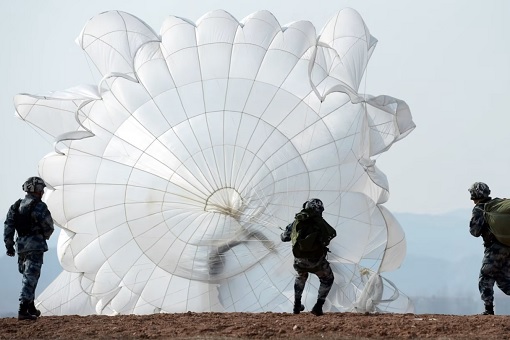
Lacking “combat experience” does not stop the Chinese government from preparing for an invasion of Taiwan and a potential war with the U.S. An analysis of leaked Russian documents by British think-tank RUSI (Royal United Services Institute) reveals how Russia is selling military equipment and technology to China that could help Beijing prepare an airborne invasion of Taiwan.
The 800 pages of documents, including contracts and lists of equipment to be supplied by Moscow to Beijing, was first published by the Black Moon hacktivist group. Apparently, Russia has agreed to equip and train a Chinese airborne battalion and share its expertise in airdropping armoured vehicles that could boost Beijing’s capacity and ability to seize Taiwan.
The agreements allow Beijing to access training and technology in one of the few areas where Russian capabilities still surpass those of the Chinese military – Russia’s more experienced airborne troops. The documents appear to demonstrate the deepening alliance between Moscow and Beijing as both China and Russia seek to forge a new global order to counter the West and disrupt the status quo.

While it’s public knowledge that Moscow has become increasingly dependent on China for dual use items to prop up its sanctions-hit military industry and sustain its war in Ukraine, the leaked documents show how Beijing is at the same time tapping its partner’s battlefield expertise to further Xi Jinping’s drive to build a modern military with capabilities that match or surpass those of the United States.
The accords are an example of the two militaries moving beyond merely symbolic joint drills and public statements to develop interoperable systems and shared combat experience in areas that China considers critical for winning a battle over Taiwan, the self-governing island of 23 million considered a breakaway province which must be reunited by force if necessary.
High ranking U.S. officials have claimed Chinese President Xi Jinping ordered his military to be prepared for a possible invasion of Taiwan as early as 2027. The documents did not mention Taiwan directly, but the analysis by the London-based institute suggests the deal would help China gain advanced parachuting capabilities that it would need to mount an invasion, potentially speeding up a timeline.
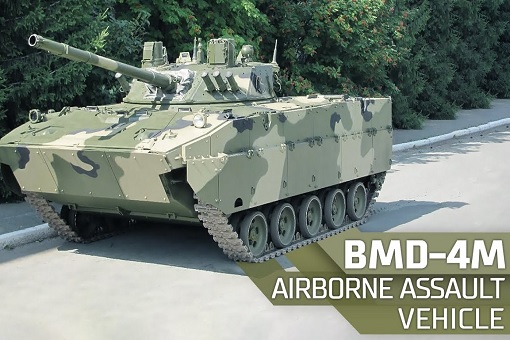
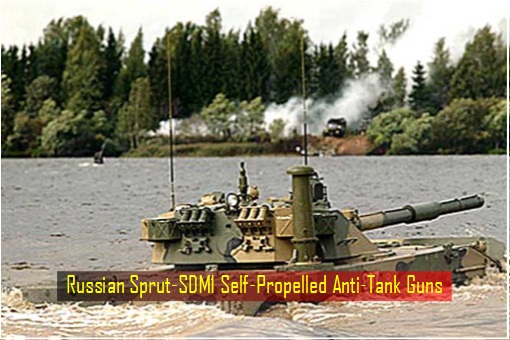
The documents show Russia agreeing in October 2024 to sell 37 BMD-4M light amphibious vehicles, 11 Sprut-SDM1 self-propelled anti-tank guns, 11 BTR-MDM airborne armoured personnel carriers to the People’s Liberation Army Air Force. The main equipment provision contract – worth about US$584 million – also included the transfer of several command and observation vehicles and special purpose parachute systems designed to airdrop heavy loads from high altitudes.
Additional documents in the cache show several rounds of negotiations including a meeting in Beijing in April 2024 at which the Chinese side requested Moscow to accelerate the delivery timeline for certain vehicles, include complete technical documentation and adapt the weaponry to make it compatible with Chinese software, electronics, radio and navigation systems.
Separate documents outlined training programs for Chinese paratroopers in the combat use of the weaponry – and the advanced command and control systems used to direct operations – by Russian specialists in Russia and later in China. RUSI said the training and the transfers would give China’s air force “expanded air maneuver capability” that offered “offensive options against not only Taiwan, but also the Philippines and other island states aligned to the U.S. in the regions.”
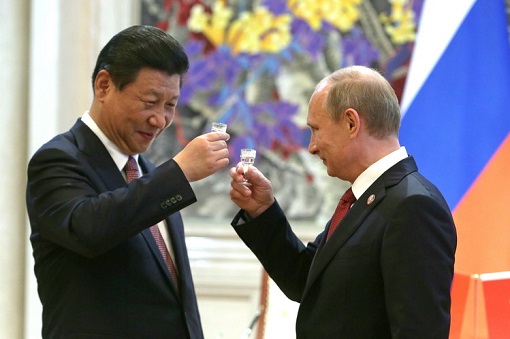
While China has so far declined to provide military hardware for Russia’s war in Ukraine, at least not openly, the two countries have continued to engage and celebrate a close security partnership to counter the U.S. and its allies. Behind closed doors, military cooperation between China and Russia goes far beyond what has been publicly acknowledged for obvious reasons.
Over the last year, Xi Jinping and Russian President Vladimir Putin have attended each other’s military parades. Their two militaries held 14 joint exercises in 2024 alone, nearly double the number a decade earlier. Last week, Chinese military representatives attended Russia and Belarus’s Zapad-2025 war games where Russian demonstrated the high-altitude airdrops of heavy equipment that China is seeking to replicate.
Although the Chinese military is widely viewed as superior to Russia’s, it lags behind Moscow in airborne combat experience and capabilities for air maneuver, which Russia has deployed in Ukraine and Syria. The agreement will give Beijing the opportunity to take Russian technology and apply it to its own weapons. But there’s something else that the U.S. and its allies are upset.
Essentially, Russia is transferring technologies that will allow China to scale up the production of similar weapons through localization and modernization. Chinese planners consider small, well-equipped units delivered by helicopter or aircraft “absolutely essential” in their plans to deliver thousands of troops to Taiwan in the early hours of a conflict.
For China, Russia’s airdrop expertise and weaponry is most valuable as part of preparations for a potential invasion of Taiwan. Even with its far greater firepower, a full-scale takeover of Taiwan would be a complex and risky move for an untested Chinese military. To succeed, China would need to deliver hundreds of thousands of troops to the small number of suitable landing spots along the island’s shores – all while deterring or defeating a potential U.S. intervention.
Russia agreed to sell China systems which are designed for parachuting up to 190 kilograms (419 pounds) from an extremely high altitude – from 8,000 meters (26,250 feet). That height would allow Chinese forces to glide for up to 80 kilometers (50 miles) allowing “Chinese special forces groups to penetrate the territory of other countries without being noticed”.
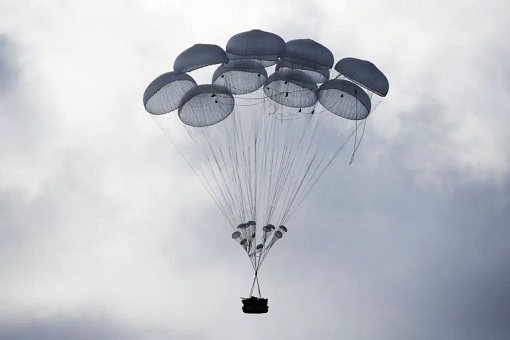
The Russian system, known as Dalnolyot, would perform such parachuting under colder temperature conditions – from -40 degrees Celsius (-40 Fahrenheit) to -60 degrees Celsius (-76 Fahrenheit). The system could be used for a “stage zero” landing in Taiwan, in which Beijing secretly sends in equipment and special forces from aircraft outside Taiwanese airspace.
“They have studied D-Day backward, forward and upside down and realized that it would have failed without an airborne component,” – said Goldstein, who is writing a book on China-Russia military ties. That makes Russian experience in Ukraine even more valuable for Beijing, and right now, “Russia will do more or less anything to keep China happy and cooperative,” he said.
For Taiwan, Russian support for China’s already significant airborne attack capabilities intensifies concerns that Beijing could seize infrastructure inland even as it storms ports and beaches along the coast. Leaked Pentagon assessments from 2023 ruled Taiwan’s air defenses especially vulnerable to missile strikes that could cede air superiority to China early in a conflict.

“Previously, China’s lack of ability to deliver troops in large numbers and maintain logistical support were considered weaknesses, but if Russia is providing technical support, that will be a bigger challenge for Taiwan’s anti-landing operations,” – said Su Tzu-yun, a director at the Institute for National Defense and Security Research, a Taiwanese think tank.
China has never really used its “very young” airborne forces. Moscow’s assistance could help speed up China’s airborne program by about 10 to 15 years. Analysts said technical instruction in Russian command and control systems, which integrate battlefield data from multiple sources to improve decision-making, would be of particular interest for China as it plans a potential assault on Taiwan.
“China expects to fight in a degraded environment where their systems will be under threat from jamming and cyberattack. Having Russia train them to operate a potentially proven command and control system is going to be worth the millions of dollars they are going to spend,” – said Joshua Arostegui, chair of the China Landpower Studies Center at the U.S. Army War College’s Strategic Studies Institute.
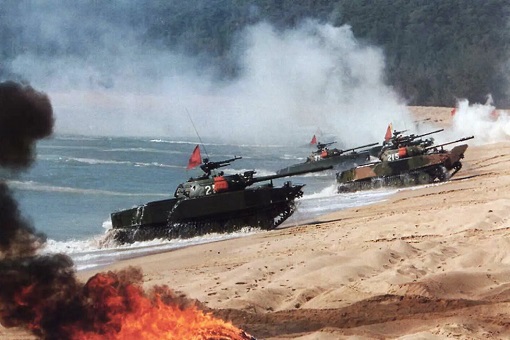
In addition, supplying the Chinese airborne battalion with Russian amphibious vehicles, anti-tank guns, armored personnel carriers and command and observation vehicles would boost its capabilities to that of a conventional army unit, Arostegui added. “This would give them the opportunity to learn tactics, techniques, and procedures for airborne combined arms operations.”
Earlier documents from the cache, reported by independent investigative outlet The Insider in August, showed Russian-Chinese cooperation – a joint project between China Electronics Technology Group (CETC) and Russia’s Research Institute of Communication and Control Systems – to create an automated command system for Chinese airborne troops designed to coordinate operations, plan missions, designate targets and provide secure data transmission.
Moscow has long been Beijing’s biggest arms supplier. China’s air force in particular has been one of the largest recipients of Russian weaponry. It has purchased dozens of Il-76s – the heavy-lift transport aircraft that could be used to drop armored vehicles in an airborne assault – since 2005 while also rapidly expanded a fleet of its own domestic equivalent Y-20s.
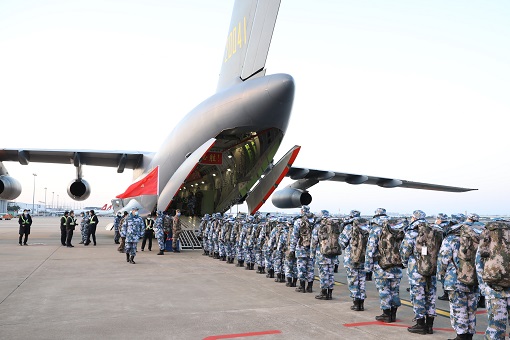
China’s purchase of Russian equipment was in part a way to receive training, including the ability to carry out infiltration by special forces. If you want the Russians to train you, they aren’t going to be able to do that on a load of Chinese equipment, so it’s also a clever way for Russia to sell its military hardware. At the same time, Moscow may want to draw Beijing into a conflict with Washington over Taiwan, distracting the U.S. from Russia’s war with Ukraine.
In a future war over Taiwan, Moscow’s supply of oil, gas and other natural resources – and its large defense industry – could become “strategic backup” for China. China has superior equipment, but Russia has more combat experience. It is a very good example of how the Russians have become an enabler for the Chinese, thanks to the Western policy of pushing China and Russia together.
Faced with intensifying Chinese threats and uncertain support from the Trump administration, Taiwan has boosted military spending and focused on training to repel a potential invasion. This year’s annual exercises involved practicing shooting down a Chinese airborne attack on the island’s main Taoyuan International Airport. Taiwan most likely has to defend itself when China airdrops armoured vehicles on golf courses near Taiwanese ports and airfields.
Other Articles That May Interest You …
- From Robot Wolves To Satellite Killer – How China’s Military Parade Sends A Message That Annoys Trump
- SCO Summit – U.S. Terribly Upset Over Car Rides, Hand-Holding & Jokes Sharing Between Xi, Putin And Modi
- Malaysia, Thailand, Cambodia Celebrate 19% Tariffs – The Art Of Sucking Up Trump & Surrendering Concessions
- Trump Threatens 100% Tariffs On Russia – But Here’s Why Russian Markets Jump In Celebration Instead
- Pawns Europe & Ukraine Got Played – The Hidden Message Behind US-Russia Talks In Saudi Without Allies
- China Secretly Hiding Tonnes Of Gold – The Buying Spree In Preparation Of Trade War, Sanctions Or Even Invasion Of Taiwan
- Sanction My Foot! – Russia Makes A Mockery Of Western Oil Sanctions, While China & India Laugh All The Way To The Bank
- Europe Closed Front Door, But Opens Backdoor – How India Makes Easy Money Reselling Russian Cheap Oil To EU
- Black Market For Oil Is Booming – How Russian “Dark Fleet” Of Tankers Evade Western Price Cap
- A Strange Submarine Design – The West Worries Chinese Latest Stealth Attack Sub Could Strengthen Sea Blockade On Taiwan
- Warning To The U.S. And Taiwan – Here’s Why China Sent Record 56 Warplanes Into Taiwan, Raising Fears Of War

|
|
September 27th, 2025 by financetwitter
|


|

|

|

|

|

|





















Comments
Add your comment now.
Leave a Reply