



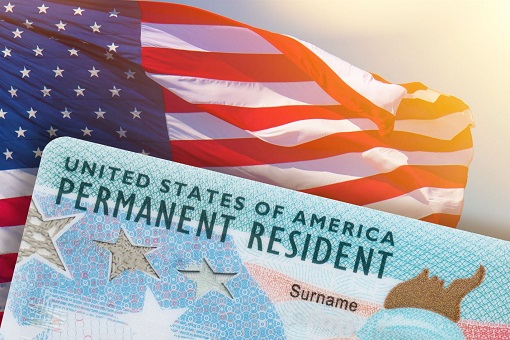
First introduced in 1946 after World War II, the first official “Green Card” (Form I-151) got its name because it was printed on green paper. The concept of the Green Card was established through a series of laws starting with the Alien Registration Act of 1940, which required “aliens” to register with the U.S. government. Yes, America likes to call all non-citizens as aliens.
When it comes to permanent residency in the U.S., the green card is the name of the game, authorizing the green card holder the right to live and work in the country indefinitely. Green cards issued prior to 1989 do not have expiration dates and they are not required to be renewed, unless the green card holder wishes to. Currently, the card is yellowish – and not green anymore – with a magnetic barcode on the back.
Immigrants who have lived in the U.S. for at least 7 years, do not have a criminal record and meet all other eligibility requirements could apply to receive a green card. Interestingly, while the green card now has an expiration date (10 years) and has to be renewed, the green card holder’s status as “lawful permanent resident” is still valid unless the status is abandoned or revoked by U.S. government.
However, there are numerical limits or “quota“ for most family-based and employment-based green cards. In the financial year 2023, the U.S. granted about 1.17 million Green Cards. As of 2024, there are an estimated 12.8 million green card holders, of whom almost 9 million are eligible to become United States citizens. The “Internet boom” in the 1990s has changed the game plan.
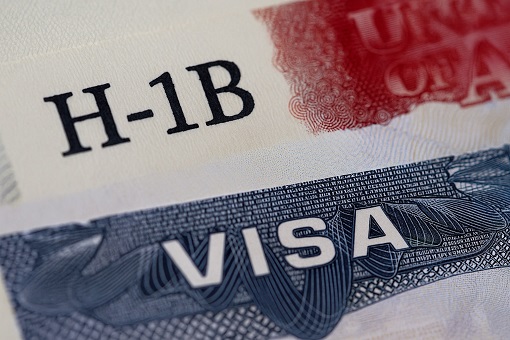
The Immigration Act of 1990 has created something called the H-1B program, allowing U.S. employers to hire foreign workers on a temporary basis in jobs that require highly specialized knowledge and at least a bachelor’s degree, or its equivalent, in a related specialty. H-1B approvals are valid for 3 years and may be extended for a maximum of 6 years. If an employer is sponsoring a worker for U.S. permanent residency, the H-1B approval may be extended for more than six years.
Since 2005, H-1B approvals for new employment have been capped at 65,000 per year, with an additional 20,000 approvals reserved for foreign workers who have advanced degrees from U.S. colleges and universities. If the number of applications exceeds the caps, USCIS uses a lottery system to process and approve applications. But some employers are exempted from the caps, including universities and colleges, nonprofits and government research institutions.
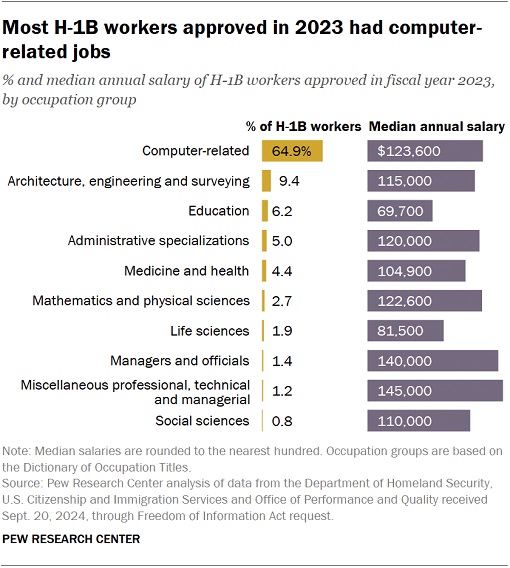
Today, the majority of H-1B visas (65% in 2023) are issued for “computer-related” jobs, such as computer scientists, engineers, or analysts. While those with green cards don’t have a residency tied to employment, meaning, even in the case of job loss, they can stay in the US, look for a job with any company, and not be tied to one employer who is sponsoring them, H-1B holders enjoy wages protection.
To prevent pay-undercutting, H-1B employers must pay at least the “prevailing wage,” the average wage paid to similar workers in the same geographic area. In 2023, the median wage for H-1B workers was US$118,000, on par with the 90th percentile (US$121,000) of all U.S. wages. There are as many as 730,000 H-1B holders within the U.S., and an additional 550,000 dependents.
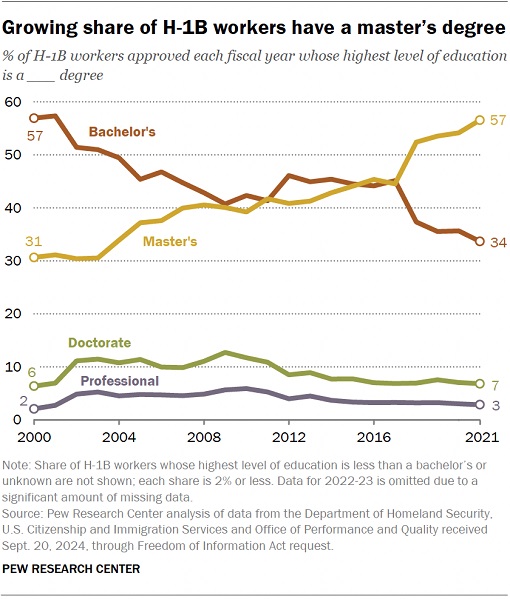
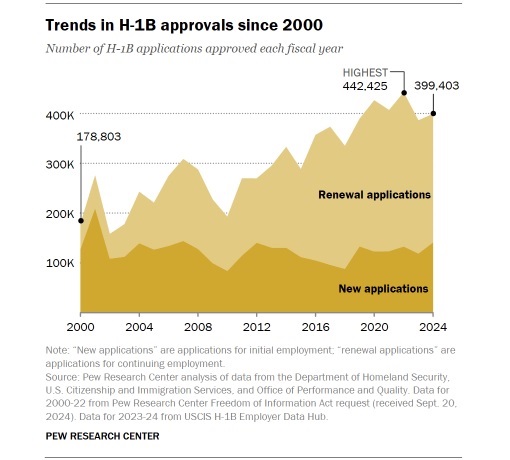
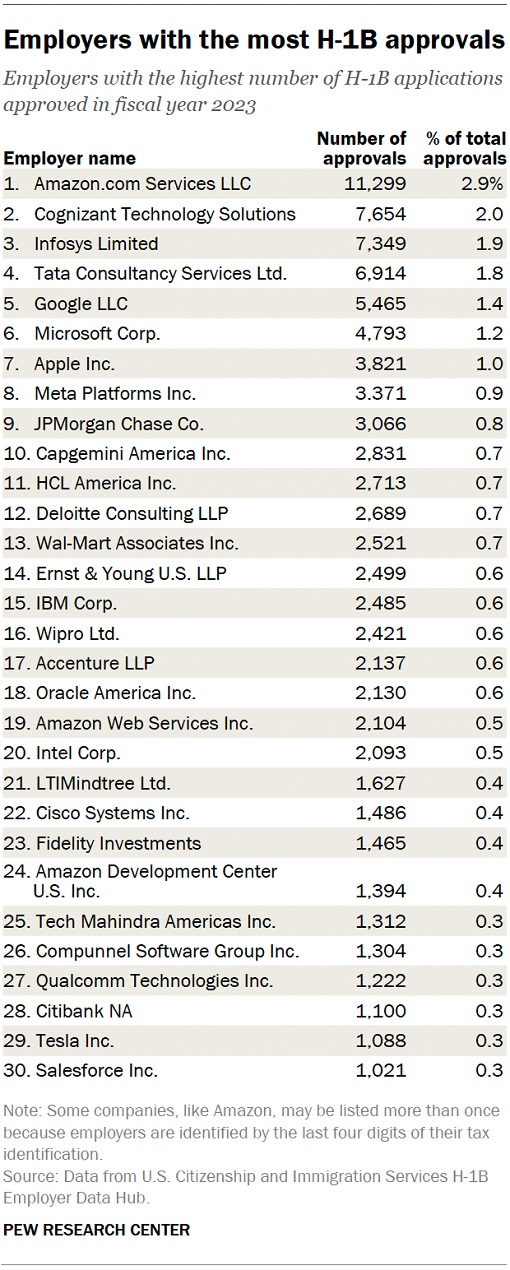
About 400,000 H-1B applications for high-skilled foreign workers were approved in 2024 alone – 65% or 258,196 were renewals. The other 35% or 141,207 were new applications for initial employment. The share of H-1B workers whose highest degree is a master increased from 31% in 2000 to 57% in 2021. And Amazon has been the employer with the most H-1B workers approved each year since 2020 – more than 11,000 in 2023.
Together, H-1B holders and their spouses contribute US$86 billion annually to the U.S. economy and pay approximately US$24 billion in federal and payroll taxes, as well as US$11 billion in state and local taxes each year. Someone seeking an H-1B visa must generally be sponsored by a U.S. employer, who may pay as much as US$10,000 per employee in petition costs and attorney fees.
However, all hell broke loose when President Trump announced a move to dramatically reshape the nation’s immigration system, slapping hefty new fees – US$100,000 annually – to H-1B visa programme for skilled foreign workers effective September 21. The new fee is intended to crack down on a system the Trump administration says has been used by tech companies to avoid hiring American workers.
It would only apply to new requests, but companies would have to pay the same amount for each applicant for six years, U.S. Commerce Secretary Howard Lutnick said. This has caused panic, with American companies scrambling to tell their those abroad should “try to return before tomorrow’s deadline if possible”. Microsoft, JPMorgan and Amazon told employees with H-1B visas who were already in the U.S. to remain there.
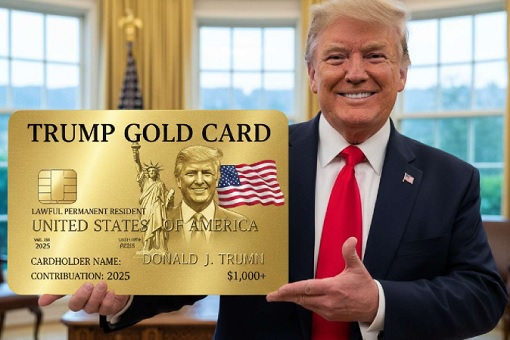
Signing the executive order in the Oval Office on Friday (September 19) changing the H-1B programme, Trump also rolled out a “gold card” for those willing to pay US$1 million to secure U.S. residency. “We’re having people come in, people that in many cases are very successful or whatever, as opposed to walking over the borders,” – Trump said.
The new gold card would use existing green card categories known as EB-1 and EB-2, which people can qualify for if the government determines they have “extraordinary ability” in their fields. Lutnick said 80,000 of these visas would be available, adding that other employment-based visa categories would be suspended in order for the new system to work.
“We’ll be taking in hundreds of billions of dollars. We’re going to take that money and we’re going to reduce taxes, we’re going to reduce debt,” – Trump said. The goal of implementing the higher fees for H-1B was to make sure corporations “hire Americans and make sure the people that come into the country are top, top people,” – Lutnick said.
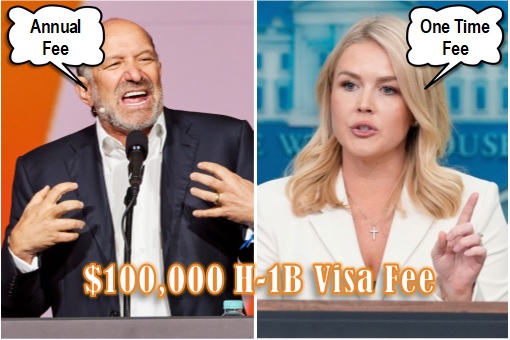
But the “one-day deadline” continues to create chaos when the White House spokesperson Karoline Leavitt contradicted Lutnick with a clarification that the new US$100,000 levies will not be applied to existing holders of valid visas re-entering the country. She also said on Saturday (September 20) – “This is NOT an annual fee. It’s a one-time fee that applies to the petition”.
The confusion saw companies telling any employees unable to make it back before the order takes effect to avoid attempting U.S. re-entry “until further guidance is provided”, while Ms Leavitt said that current H-1B via holders who are currently outside of the country right now will not be charged US$100,000 to re-enter the U.S. But the damage has been done.
On the popular Chinese social media app Rednote, many H-1B holders shared horror stories of rushing back to the U.S. – some just hours after landing abroad – fearing they would be subject to the new US$100,000 fees. Indian IT industry body Nasscom warned Trump’s new order could disrupt the global operations of Indian technology services companies that deploy skilled professionals to the U.S.
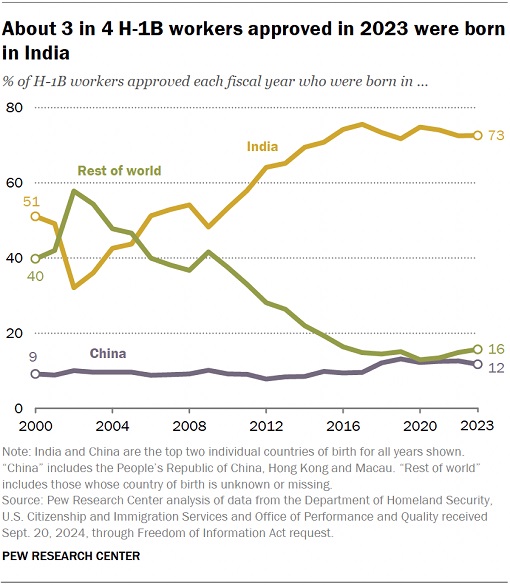
India was the largest beneficiary of H-1B visas last year, accounting for 71% of approved applications while China came in second at 11.7%. The biggest casualty would be small or medium-sized companies. Jorge Lopez, the chair of the immigration and global mobility practice group at Littler Mendelson PC, said a US$100,000 fee “will put the brakes on American competitiveness in the tech sector and all industries”.
The H-1B program has put Trump at odds with U.S. tech companies. Amazon, Google and Tesla are among the biggest users of the visas, which let companies bring foreign workers to the U.S. on a temporary basis. The workers overwhelmingly come from India and fill jobs in such fields as software development, computer science, and engineering.
The debate over the H-1B system has split members of Trump’s administration and his supporters. Some aligned with the MAGA movement say that it has allowed primarily Indian men to take lucrative tech and engineering jobs away from Americans, while more business-minded Republicans – including David Sacks, Trump’s AI czar – argue it is crucial for businesses to recruit the best global talent.
The visa program lost one of its most vocal backers in Elon Musk when he left the Trump administration. Adam Kovacevich, head of pro-tech group Chamber of Progress, said the increased fees on H-1B visas would affect not smaller companies with limited resources, but also could make it harder for the U.S. to compete with China in developing technologies like artificial intelligence (AI).
Defending the fees hike to protect U.S. jobs, the Trump administration reveals how some American companies abused the programme by laying off their American technology workers “and replaced them with lower-paid H-1B foreign workers”. For example, one company was approved for 5,189 H-1B workers in FY 2025, while laying off roughly 16,000 U.S. employees this year.
Another company (Intel) was approved for 1,698 H-1B workers in FY 2025, but announced it was laying off 2,400 U.S. workers in Oregon in July. A third company (Amazon) has reduced its U.S. workforce by 27,000 since 2022 while receiving 25,075 H-1B approvals. Yet another company reportedly cut 1,000 American jobs in February despite receiving 1,137 H-1B approvals for FY 2025.
Still, known for flip-flopping and making spectacular U-turns, Trump may reverse the hastily implemented policy. Besides, it isn’t clear whether the White House’s latest actions will face legal challenges. Typically, new visa fees must either be set by Congress or be levied through formal regulations, which first undergo months of public notice and comment.
Early in his first term in 2017, Trump signed an executive order that increased scrutiny of H-1B applications, seeking to improve fraud detection. Later, while seeking to attract support from the tech industry while on the campaign trail – Trump vowed to make the process of attracting talent easier, going as far as to propose green cards for college graduates.
Because it currently costs merely US$215 to enter an applicant into the lottery system to decide the lucky winners, the program is vastly oversubscribed. Companies file hundreds of thousands of petitions for the visas each year. Visa holders can eventually become eligible to apply for green cards, which would let them stay in the country indefinitely, hence making H-1B very popular.
The Trump administration is also exploring a “platinum card”program for a US$5 million fee, which would allow an individual to live in the country for up to 270 days a year without being subject to tax on non-U. S. income. However, Congress would need to approve this programme. Clearly, Trump is milking “cash-cow America”, setting up a toll-gate to collect money from those desire to enter the country.
Other Articles That May Interest You …
- New Huawei AI System Now Challenges Nvidia After China Ban
- Give Him Something To Brag About – Apple CEO Tim Cook Shows How To Scam Trump To Avoid Tariffs
- Trump Has Already Lost His Trade War Against China – But He Can’t Find Ways To Climb Down And Save Face
- Highest Salary Of 20-Million Yuan – But China Still Facing AI Talent Shortage Of 4 Million By 2030
- US$1 Trillion Wipeout – How China’s DeepSeek AI Creates Havoc And Spooks U.S. Financial Markets
- Average American Credit Card Debt Surpass $6,500 – Consumers So Broke McDonald’s May Re-introduce $5 Meal
- China Retaliates – Travel Visa Suspension For Business, Tourism, Medical & Even Transit Against South Korea & Japan
- UK Offers Work Visa To Attract Talents From Top Universities – Check This List To See If You’re Qualified
- U.S.’ Colleges Need Cash – Chinese Students Are Welcomed Back Amid Covid Pandemic & Hate Crimes Against Asians
- Meet Eric Yuan & His Inspiring Story – The CEO & Founder Of Zoom Who Got $6.6 Billion Richer In Just 24 Hours
- From Trade War To Tech War – After 5G Technology, The US Aims To Cripple China’s Artificial Intelligence

|
|
September 21st, 2025 by financetwitter
|


|

|

|

|

|

|

















Comments
Add your comment now.
Leave a Reply