



President Donald Trump’s plate is full with problems. Last year, a survey of more than 150 historians ranked him as the worst President in the 232-year history of the United States – scored 10.92 out of 100. But his supporters, who have yet to see the consequences of Trump’s tariff war against the entire planet, would praise him as the best President since the Ice Age.
It’s not rocket science that there is no winner in a trade war. Both China and the U.S. will lose, one way or another. The question is who is better prepared and who can endure more pain in tariff war. While the White House brags that China will lose as they enjoy a trade surplus, the Chinese exporters said if the U.S. doesn’t want their goods, “other countries have money” to buy them.
There’s good news though. If U.S.-China tariff war continues to escalate, other countries around the world may enjoy cheaper Chinese products as the world’s biggest factory could dump their goods at huge discount to clear inventories. China’s not backing down in Trump’s game of chicken, whilst the U.S. President is busy looking for excuses – or cook up distractions – to claim victory.
So, when China’s April factory activity shrank, which is to be expected as the U.S. importers had pre-emptively front-loaded purchases before tariff hikes kick in and shipments halt in April, Trump swiftly twisted it as a victory. Likewise, when news flashed that Beijing is “evaluating” an offer from the U.S. to negotiate, pro-Trump news media quickly claimed that China has blinked.
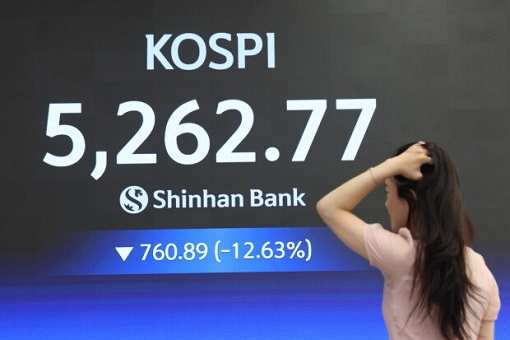
But facts don’t lie. The U.S. economy contracted 0.3% in the first quarter of 2025 – the first negative reading since 2022. The U.S. dollar is dropping, which puts its role as the world’s top safe haven in doubt. The U.S. stock market is crumbling, which saw an US$8.9 billion outflow last week alone after investors fled to buy Japanese and European shares.
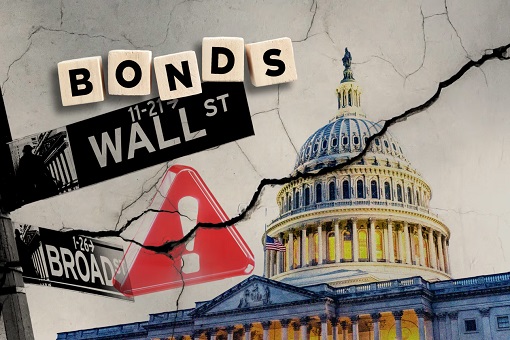
The biggest headache for Trump is not the stock market, but the bond market. The 10-year bond yields jumped from 3.99% to 4.49% – and has remained high – after the tariff war started on April 4. Normally, when the stock market tumbles or experiences uncertainties, investors fled to seek the safety of U.S. Treasuries or bonds, sending yields down as bond prices rise with increased demand.
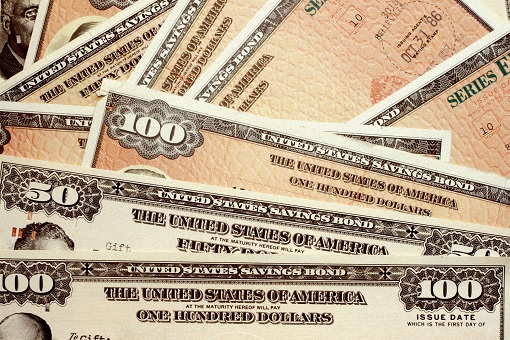
It was the American “I.O.U papers” that brought Trump down to his knees. The selloff in U.S. Treasury bonds, the largest in five years, had exposed the U.S. Archilles Heel. The POTUS blinked and paused the tariffs for 90 days. Essentially, the US$2.8 trillion Treasury market is the bedrock of the U.S. government – allowing it to finance the country’s debt by selling Treasury bills to investors.
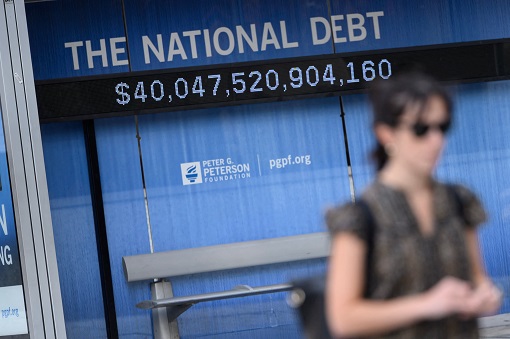
Why was Trump so terrified of the bond market? While the stock market plunge hurt millions of Americans’ retirement savings, the turmoil in the bond market creates very real pressures on the nation’s finances. In 2024, the U.S. spent more than US$1 trillion to service its debt, more than double its roughly US$500 billion in 2020. The US’ ability to keep rolling over its swelling debt is exactly what keeps it afloat.
However, thanks to Trump’s tariffs, everyone was not interested to buy the U.S. bonds as investors lost confidence and started dumping it. As a result, the U.S. has to offer “higher yields or returns” to buyers. But because the Treasury Department pays interest to debt holders, any increase in yields puts more financial strain on the nation’s coffers, whose federal debt is more than US$36 trillion.
Worse, other investors, worried that China and other creditors might start selling their U.S. Treasuries, were joining the bandwagon to avoid the bonds. Regardless whether it was due to high deficit fears, inflation fears or recession fears, the fact remains that nearly a third of US Treasuries (excluding those held by the US government itself) are held by investors outside the United States – worth roughly US$8.5 trillion.
While Trump keeps whining and complaining that everyone, including the penguins, has been ripping off the U.S., he appears to be clueless that the 30% foreign demand for Treasuries comes from the dollars surplus trading with the U.S., without which the governments around the world have no extra money or revenue to invest in Treasuries.
If the endgame of the tariff war is that the trade deficit with China is going to be zero, China has no reason to own US$800 billion of U.S. Treasuries. And if President Trump’s goal is to eliminate U.S. trade deficits with the rest of the world, the entire foreign demand for Treasuries will disappear as there is no incentive to keep the American junk bonds anymore.

Surprisingly, it was not China who had dumped the U.S. Treasury that sent shivers down Trump’s spine. Rather, it was caused by Japanese investors, who offloaded more than US$20 billion in international bonds as Trump’s tariffs shook markets early in April 2025. Crucially, the sell-off marks one of the biggest outflows over any two-week period since records began in 2005.
When even the U.S. key allies like Japan, the biggest creditor and holds US$1.1 trillion in US Treasuries, started selling the notes through private institutions – including banks and pension funds – it creates panic in the bond market. But it was just the beginning of a game of chicken between the U.S. and Japan, much to the pleasure of China, who has the world’s second largest pile of U.S. bonds.
On Friday (May 2), Finance Minister Katsunobu Kato dropped a bombshell – Japan’s massive holdings of U.S. Treasurys can be “a card on the table” in negotiations over tariffs with the Trump administration. It’s very rare for Tokyo to play such card, let alone threatens to unleash the nuclear option as a last resort in a mutually assured financial destruction for two allies.
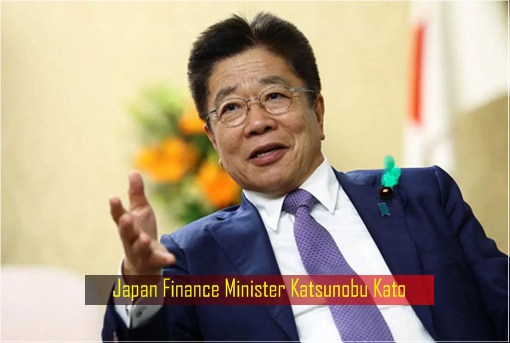
If Japan were to dump enough sovereign bonds, it could tank their price, causing borrowing costs for the U.S. to spiral out of control. However, compared with Beijing, the possibility of Tokyo follows through with its threat isn’t high. Obviously, it’s just part of negotiating tactic to exert psychological pressure on Trump to extract concessions as trade talks stall.
Japan does not necessarily need to dump its entire U.S. Treasury. The threat is enough to send a message to Washington that that it has the weapon in its toolbox to create havoc. After all, Japan exported US$64.3 billion more than it imported with the United States last year. So, the trade surplus isn’t anywhere near the China-U.S.’ US$295.4 billion surplus to plunge Japan-U.S. relationship into a hostile one.
Additionally, Japan isn’t just another large market like Germany with which America trades – it’s a key strategic partner on the doorstep to Indo-Pacific rival China. But pro-business Trump isn’t any U.S. president, who would think twice about undermining the U.S. economic ties with Japan, who hosts a large American military presence on Okinawa. This is where the game of chicken gets interesting.
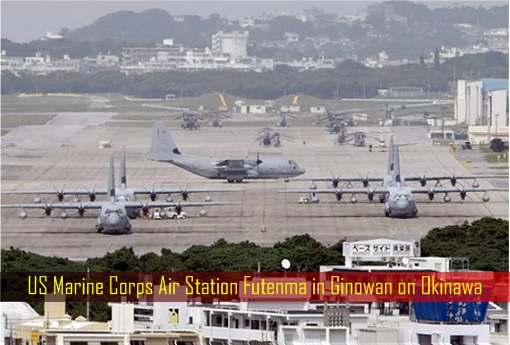
Trump presidency is likely to bet that Japan needs the U.S. more than the U.S. needs Japan because not only the Japanese have been ripping off the Americans, but also depend on the U.S. military to protect it from China. Therefore, the Japanese Finance Minister’s threat to sell U.S. Treasuries is a “very empty one”. Japan’s geo-strategic alliance isn’t as important as tariff war which Trump must win.
But the burning question is whether Trump’s team is willing to take the risk of bullying Tokyo the same way it tries – and fails – to squeeze China. Having witnessed how the “Tariff Man” chickening out in his game of brinkmanship against Beijing, Tokyo is moving away from the U.S. to get closer to China’s economic orbit as a sign of protest over Trump’s 24% tariffs on Japan.
Despite talks of reaching an agreement by July, Japan was not quite optimistic that a deal could be made because the U.S. refusal to even discuss Trump’s 25% tariffs on autos and auto parts, steel, and aluminium was considered “quite an aggressive stance.” It was so bad that even Japanese Prime Minister Shigeru Ishiba said “the tariffs on Japanese cars are absolutely unacceptable.”
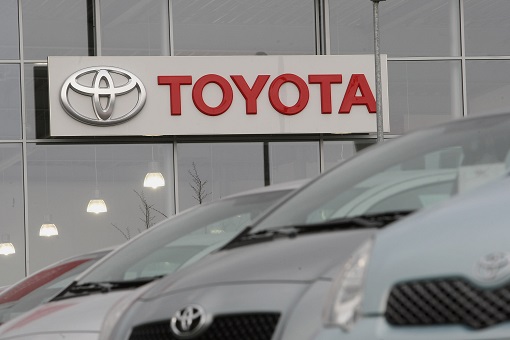
While Washington is pushing Japan to lower its own tariffs and Trump has accused the country of intentionally weakening the yen to give its exports a trade advantage, it would be a political suicide for any Japanese government to sacrifice Japan’s jobs in the auto industry. About 28% of Japan’s US$147.45 billion worth of exports to the U.S. last year was automobiles.
Earlier, opposition lawmaker Shinji Oguma has warned the ruling government to resist America’s demands, likening it as a “delinquent kid extorting someone.” He said – “If Japan listens to this and bends the other way in response to the impossible demands of bargaining and deals, it will set a bad example as a customary and historical precedent. If you get mugged and put money in their hands, they will come back to mug us.”
Other Articles That May Interest You …
- US Economy Shrank 0.3% Thanks To Tariffs – Why “Pissed” Trump Orders Amazon To Hide Tariff Costs
- Trump Chickening Out – To Slash Tariffs On China To 50%-65%, Won’t Fire Fed Chair Powell
- Trump Has Already Lost His Trade War Against China – But He Can’t Find Ways To Climb Down And Save Face
- White House Privately Begging Xi To Call Trump First – But China Slapped 125% Tariff Instead
- Beijing Raises Tariffs To 125% – American Goods No Longer Marketable In China
- Forget Stock Markets, U.S. Bonds Crashes – US Panic As China Punched Back With 84% Tariffs And Devaluing Of Yuan
- Trump Crashes Stock Markets, Dollar & Oil – Here’s Why China Retaliates With 34% Tariff, And Wiped Off $6.6 Trillion
- Recession 2025 – Why You Should Prepare For A Historic Crash As Massive Correction Builds
- $6.4 Trillion Wipeout – Financial Meltdown Has Begun As The U.S. Heading Toward A Recession
- De-Dollarization Kicks Into High Gear – Chinese Yuan Hit Record High, Overtook Japanese Yen As 4th Most Used Currency
- From Terminating Trade Deal To Cancelling $1.1 Trillion Debt Owed To China – Here’re Some Of Trump’s Crazy & Dirty Ideas
- Watch Out Trump!! – China May Weaponize “Rare Earth” To Retaliate Against U.S.’ Ban On Huawei

|
|
May 3rd, 2025 by financetwitter
|


|

|

|

|

|

|













Comments
Add your comment now.
Leave a Reply