



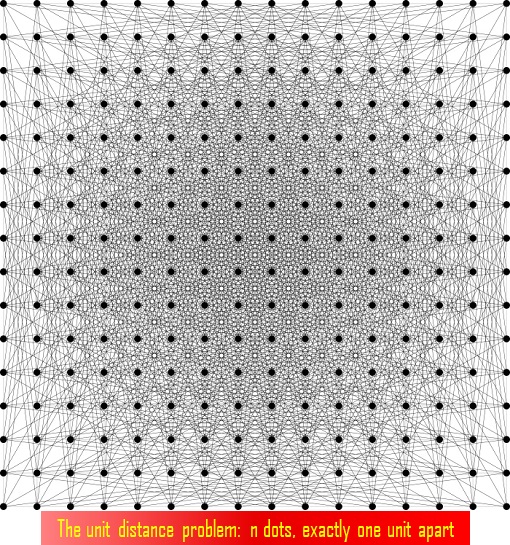
For nearly 80 years, mathematicians have studied a deceptively simple question: if you place n points in the plane, how many pairs of points can be exactly distance 1 apart? This is the planar unit distance problem, first posed by Paul Erdős in 1946. It is one of the best-known questions in combinatorial geometry, easy to state and remarkably difficult to resolve.
The 2005 book Research Problems in Discrete Geometry, by Brass, Moser, and Pach, calls it “possibly the best known (and simplest to explain) problem in combinatorial geometry.” Noga Alon, a leading combinatorialist at Princeton, describes it as “one of Erdős’ favorite problems.” The Hungarian mathematician Erdős even offered a monetary prize for resolving this problem.
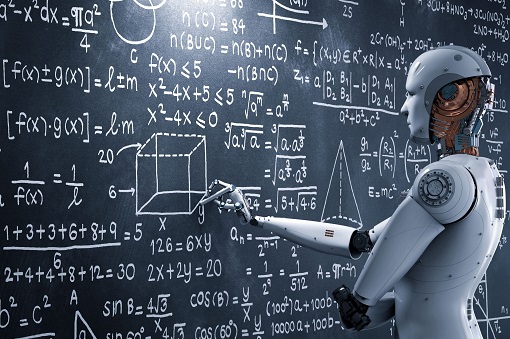
On May 20, 2026, that very famous math problem that stumped humans for the better part of a century has finally been cracked – by none other than AI (Artificial Intelligence). But even mathematicians were astonished when OpenAI announced that one of its models resolved the unit distance problem without the help of any humans scribbling a bunch of equations on chalkboards.

Not long ago, the most advanced AI models couldn’t do basic math. By last year, they were performing at gold-medal levels at the International Mathematical Olympiad. Now they are solving classic problems in combinatorial geometry using algebraic number theory. In no time at all, artificial intelligence has gone from stupid to frighteningly smart.
The AI model was fed with this prompt:
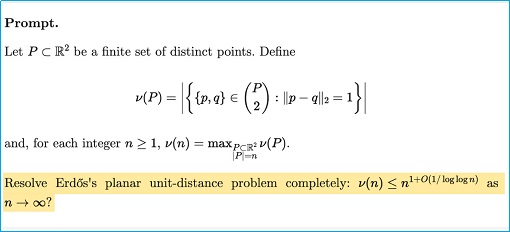
Then the AI spit out this proof:
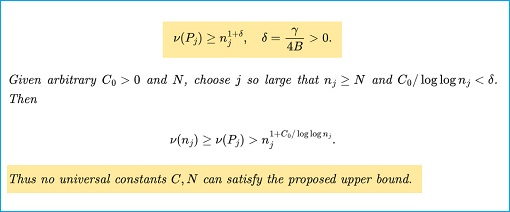
And everyone in the math kingdom lost their minds. For those who aren’t fluent in numbers, OpenAI helped translate its findings by presenting them alongside 19 pages of companion remarks from prominent mathematicians. As a rule, mathematicians demand proof – hot hype – before they are willing to accept elementary facts.
Fields medalist Tim Gowers, writing in the companion paper, calls the result “a milestone in AI mathematics.” According to leading number theorist Arul Shankar, “In my opinion this paper demonstrates that current AI models go beyond just helpers to human mathematicians – they are capable of having original ingenious ideas, and then carrying them out to fruition”.
News that large language models (LLM) have made major advances in solving Erdős problems has created an uproar and interest amongst mathematicians. While previous LLM solutions to Erdős problems used standard techniques, this one took an entirely different approach. Rather than starting from Erdős’ original probability-theory-based framing of the problem, as human mathematicians had, the LLM found an alternative route.
“Paul Erdős had a concept of ‘Proofs from The Book’, meaning that the argument is so compact and elegant that this is the proof God would’ve written down in ‘The Book,’” Jared Lichtman, a mathematician at Stanford University in the US, wrote on the social media site X after the proof was announced.
Erdős thought the limit was n1+C/log log(n) where C is a positive constant, but OpenAI’s model identified a higher bound. But as it turned out, AI showed Erdős was wrong. OpenAI’s announcement shows that the new proof “demonstrates that current AI models go beyond just helpers to human mathematicians – they are capable of having original ingenious ideas, and then carrying them out to fruition”.
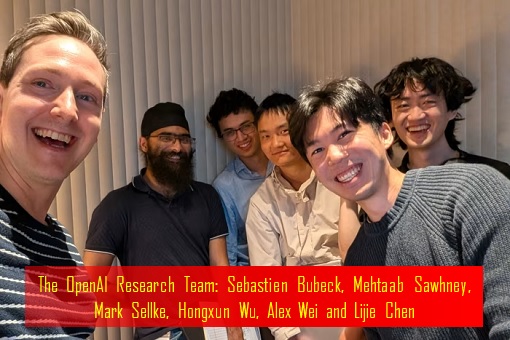
OpenAI employees said this result would have sounded completely bananas one year ago. “Forget one year ago,” researcher Sebastien Bubeck said. “A month ago.” So imagine how unimaginable it was 80 years ago, when the unit distance problem was posed by Paul Erdős, known as the most prolific mathematician in history.
Erdős was also known as an eccentric, nomadic genius who lived out of a suitcase, worked around the clock and traveled all over the world, true to his personal motto: “Another roof, another proof.” In addition to his research, he left behind a sprawling collection of questions known as Erdős problems, which have become a benchmark for measuring progress in math.
You can tell how much he liked any given problem by the amount of money he offered for its solution. The unit distance problem was among his favorites: It originally came with a US$300 bounty, which Erdős later bumped up to US$500. When he wasn’t assigning monetary values to math problems, Erdős divided them in two categories: marshmallows (“a tasty tidbit supplying a few moments of fleeting enjoyment”) and acorns (“requiring deep and subtle new insights from which a mighty oak can develop”).
After the AI disprove Erdős’ planar unit distance conjecture, even OpenAI’s researchers were stunned. “I initially didn’t believe it,” said Mehtaab Sawhney, a Columbia mathematician at OpenAI. So they searched for errors, verified the results with outsiders and checked the AI’s work using the company’s AI coding agent. “With enough reading and enough Codexing,” Sawhney said, “it seemed believable – and pretty remarkable.”
Long before AI, mathematicians who solved Erdős problems often framed their checks instead of cashing them. For them, the money was worth less than the glory. When OpenAI researchers were asked about their plans for the prize, they hadn’t given it much thought. But they did have lots of thoughts about a question – “Why did AI succeed where humans failed?”
The first explanation is that this particular solution happens to be highly counterintuitive. Most people who tackled this problem tried to prove Erdős’s conjecture, rather than disprove it. Only by defying conventional wisdom and experimenting with seemingly improbable strategies did the model find an unexpected path forward.
The second is that humans specialize while AI synthesizes. While mathematicians tend to focus on their specific areas of expertise, AI models use their vast knowledge to spot connections that we couldn’t possibly see ourselves. In this case, that meant pulling from both algebraic number theory and discrete geometry, which have about as much in common as the marathon and pole vault.

The third explanation is that AI has time, attention, patience, focus and the persistence to stick with methods that humans might abandon – and the solution to this Erdős problem demanded it. “It’s the kind of idea that you try for a bit, it doesn’t work, and you think maybe you were just too hopeful,” said Mark Sellke, a Harvard statistician at OpenAI. “So you give up and move on.”
Unlike humans, AI doesn’t move on. It keeps plugging away without taking breaks to eat, sleep, answer emails, pick the kids up from school and watch the Knicks. And it can think coherently for so long that even an abridged version of the model’s “chain of thought” ran more than 75,000 words – the length of the first “Harry Potter” book.
The best part is this – a former OpenAI researcher did some back-of-the-envelope math and estimated it took less than 32 hours and US$1,000 in tokens, a bargain for a result of this caliber. The researchers wouldn’t confirm the exact amount of time and compute, but Bubeck described the costs as “really nothing crazy at all.”

OpenAI says this result marks an important moment in the interaction between AI and mathematics – an AI system has autonomously resolved a longstanding open problem at the center of an active field. It also offers an early glimpse of a new kind of collaboration between AI and human mathematicians.
The takeaway is bigger than this particular result. Better mathematical reasoning can make AI a stronger research partner – something that can hold together difficult lines of thought, connect ideas across distant areas of knowledge, surface promising paths experts may not have prioritized, and help researchers make progress on problems that would otherwise be too complex or time-intensive to tackle.
Others, however, are more cautious. David Bessis, a mathematician-turned-science writer who previously worked on algebra, geometry and topology, claims that even such apparent successes stem from a misconception of mathematics as a logically direct process of churning out theorems, given some rules. Bessis argues that the method used to verify AI-generated proofs, which involves a computer program called Lean, may reduce the benefit the mathematics community gains from proofs.

Another challenge is that with AI systems churning out new proofs at scale, there are simply not enough people with the skills needed to check them. A process called autoformalization could solve this problem by turning human proofs into what Bessis calls “bulletproof, machine-verifiable logical derivations” expressed in Lean or other specialized languages. At that point, AI-generated proofs could be checked automatically. The question is, what knowledge will humans gain in the process?
Other Articles That May Interest You …
- The Math Legend Who Left Academia – For AI Startup Run By A 24-Year-Old Genius
- More Competitive Vietnam – Making English Compulsory 2nd Language In Schools By 2035
- All Roads Lead Back To China – One Entrepreneur’s Supply-Chain Odyssey Shows Just How Difficult It Is To Quit China
- Highest Salary Of 20-Million Yuan – But China Still Facing AI Talent Shortage Of 4 Million By 2030
- US$1 Trillion Wipeout – How China’s DeepSeek AI Creates Havoc And Spooks U.S. Financial Markets
- Scrambling To Save TikTok – Why And How Trump Flip-Flops After Accusing TikTok Of National Security Threat
- Electric Car As Cheap As $11,000 – How China Beats The U.S. In Electric Vehicles & Leaves Global Brands In The Dust
- U.S. Tech War On China Backfires – How Sanctions Boosting China Chipmaking Industry To Become Self-Sufficient
- Apple’s Secret $275 Billion Investment In China – A Warning Why The U.S. Cannot Afford To Start A War With The Chinese
- Here’s The Real Reasons Trump Bans TikTok – And It Has Nothing To Do With National Security Threat
- From Trade War To Tech War – After 5G Technology, The US Aims To Cripple China’s Artificial Intelligence

|
|
May 30th, 2026 by financetwitter
|


|

|

|

|

|

|


























Comments
Add your comment now.
Leave a Reply