



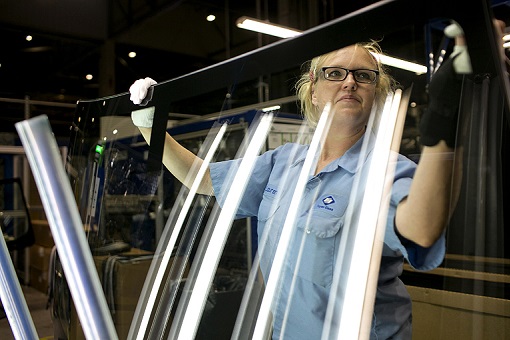
Chandra Jarvis has worked 13 years at the Vitro plant in Crestline, a distressed rural town of some 4,500 residents. Wages helped the 48-year-old single mother support her daughter through nursing school and her son through high school. She said working at the plant, where she is known as “Momma,” provides her and co-workers both financial security and a sense of community.
However, competition from the Fuyao Glass America plant is threatening about 250 jobs at Vitro, a glass factory operating since the 1950s. Vitro, the company that owns the longtime plant in Crestline, Ohio, has spent the past year considering whether to shut down, said Carlos Bernal, Vitro’s head of automotive glass. Many employees are now afraid of losing jobs.
There was a U-turn though. After announcing plans to close the Vitro plant at the end of 2026, the company told employees last month it would continue operating. Yet, the plant’s long-term future is uncertain. Since 2019, Vitro has shut three auto-glass plants in Pennsylvania, Michigan and Indiana – decisions the company attributes in large part to Chinese competition.
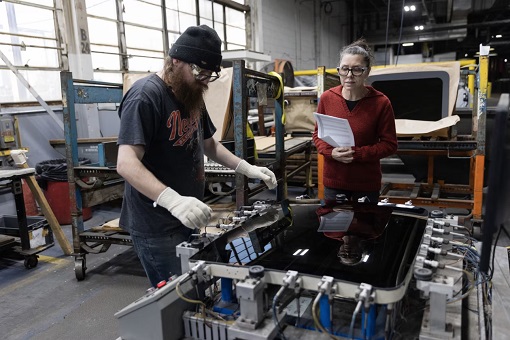
The entry of Chinese firms into the U.S. auto industry “not only threatens the safety and security of domestic supply chains,” – Bernal said, the companies “jeopardize entire communities that rely on American manufacturing jobs.” Vitro can’t match Fuyao’s lower prices and accuses the company of employing unfair business and labor practices. The Chinese company supplies GM, Ford, Stellantis and other automakers in the U.S.
Amusingly, it was Ohio’s governor, along with state and federal lawmakers, who welcomed Fuyao when the Chinese glassmaking giant took over a closed General Motors factory a decade ago. The project was once hailed as a step to reviving a battered Rust Belt region – refers to a region in the northeastern and midwestern U.S. that experienced severe industrial decline, factory closures, and population loss beginning in the 1970s and 1980s.
Even more comical is the fact that President Donald Trump spent much of last year courting foreign investment in U.S. factories, promising to replace jobs lost to the global economy. The rise of a Chinese automotive glass plant in the Ohio heartland shows the ugly truth when America’s biggest rival sets up shop – local factories still can’t compete with the Chinese even on American soil.
“There are families with young kids that they need to provide for,” Jarvis said – workers who depend on jobs that would be “ripped away” should the plant close. Roy Dent, a glass-furnace operator, still remembers the plant’s heyday in the 1970s. Then-owner Pittsburgh Plate Glass had around 1,000 employees who worked around the clock to supply auto plants in Detroit and beyond.
“There were times since I’ve been here that I’ve seen helicopters land in a parking lot just to take product out,” – Dent said. Trump’s tariff agenda is meant to restore those glory days, and many Vitro workers say they support the president’s focus on rebuilding American manufacturing. They also are indignant about the government unfurling a welcome mat for Fuyao, about a two-and-a-half-hour drive from Vitro.
Vitro’s concerns reached Washington after federal authorities conducted a raid on the Fuyao plant in 2024. The U.S. alleges that Chinese business owners formed a web of dozens of commercial enterprises in Ohio to “facilitate the harboring, transportation, and employment of illegal aliens at various factories,” including Fuyao, which allegedly funneled US$126 million to companies in the scheme.
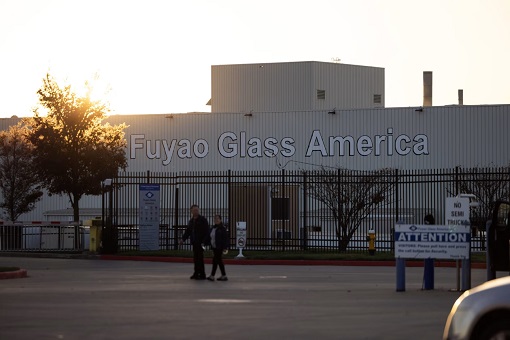
Fuyao rubbishes the accusation and denies any wrongdoing. Instead, it attributes its success to the same production prowess and economies of scale that have made China the world’s leading manufacturer. The company said its Moraine plant employs more than 3,000 workers – most of them from the area – and is expanding.
“In any industry, long-term success cannot be achieved by price alone,” – said Stella Zhang, Fuyao spokeswoman. “Our prices are reasonable, and customers choose Fuyao based on a comprehensive evaluation of technological expertise, product quality, delivery reliability, and service excellence.” She said all employees at Fuyao were authorized to work in the U.S. and that the investigation targeted its suppliers, not Fuyao.
Upset, Vitro and its Washington allies say Fuyao’s success reflects a way Beijing might try to hollow out American manufacturing capacity and undermine critical industries. They argue that Chinese companies can evade tariffs by moving production to the U.S., using low prices to undercut manufacturers in America, a practice known as internal dumping.
These companies trounce competitors with a combination of production efficiencies and, allegedly, illegal labour practices as well as subsidies from Beijing, according to China hawks in Washington. “It’s a really dirty game,” – said Elaine Dezenski, head of the Center on Economic and Financial Power at the Foundation for Defense of Democracies, a think tank critical of China.
Fuyao’s success – or rather Vitro’s failure – has set off national-security concerns in Congress – mainly that China could disrupt the American automotive sector and other crucial industries if it gained significant market share at the expense of factories now operating in the U.S. “The Chinese government is systematically weakening our economy from within our own borders,” – said Nazak Nikaktar, a former Commerce Department official in Trump’s first term.
Even supporters of Trump and Vice President JD Vance, who grew up in Ohio, expressed frustration and confusion about why they haven’t been pitched a lifeline. “They say they want to make America great again – where’s our help?” – Jarvis asked at a roundtable with a dozen Crestline employees. Some administration officials are discussing ways to limit Chinese investment in the U.S. on national-security grounds.
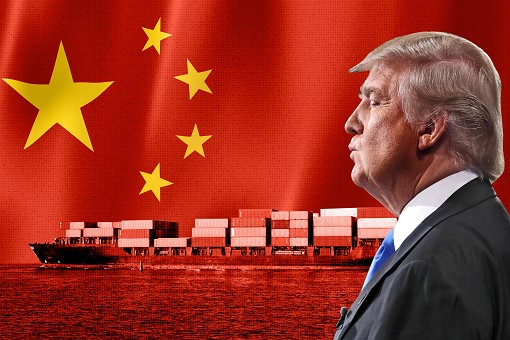
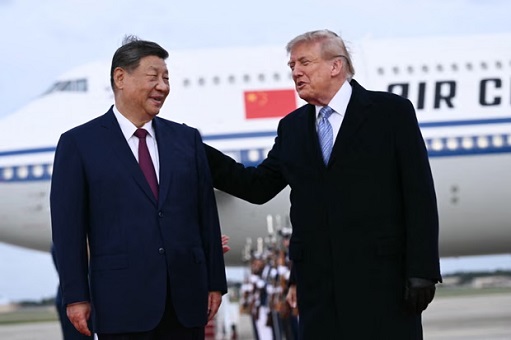
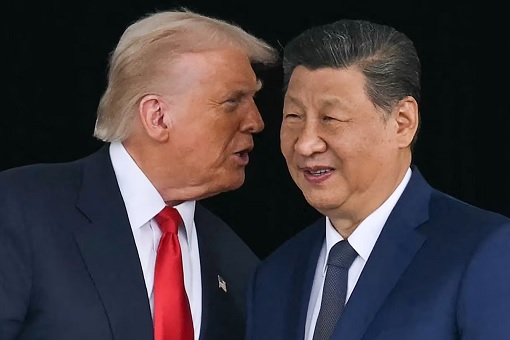
Among the strategies under discussion is closer evaluation of foreign investments in such protected industries as automotive, copper, steel, aluminium, and critical minerals. However, President Trump, who is expected to meet with Chinese leader Xi Jinping in April, could derail any new restrictions should the U.S. strike an investment deal with Beijing.
While Chinese investment in the U.S. has fallen in recent years, similar complaints are erupting in other industries. Unable to compete even on American soil, U.S.-based copper companies have complained to the White House and Commerce Department that they fear being undercut by Chinese firms building and operating new processing facilities stateside.
The concerns sparked discussion in the Trump administration about how to regulate Chinese firms located in the U.S. “The Trump administration is committed to securing more investment into American manufacturing, without compromising on our national and economic security or our immigration and antitrust laws,” – White House spokesman Kush Desai said.
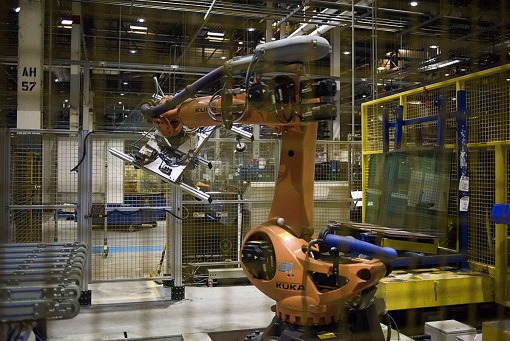
In truth, Chinese companies are simply more efficient, creative, innovative and competitive. Leaders at the Vitro factory admit they have done everything possible to bring efficiencies out of their decades-old plant, such as installing new equipment and reducing the number of employees. But they still can’t match Fuyao’s prices. “We’ve seen our volume drop by 50% in the last seven years,” – said Rich Parron, plant manager at the Vitro factory in Crestline.
While Fuyao declined to provide pricing for its products, a person familiar with recent deals with automakers said Fuyao prices generally run about 10% less than what competitors charge. Chris Kershner, president and CEO of the Dayton Area Chamber of Commerce, is among those who support more foreign investment from qualified nations. He is dismissive of Vitro’s complaints about Fuyao.
“It sounds like a competitor’s just peeved that they’re losing market share,” – Kershner said, “and maybe they’re grasping at straws.” Trump has said that despite trade tensions with Beijing, he welcomes new investment in the U.S. by Chinese companies, even in the automotive sector which he has used tariffs to protect. But at the same time, the U.S. government tries to oppress and intimidate Chinese companies.
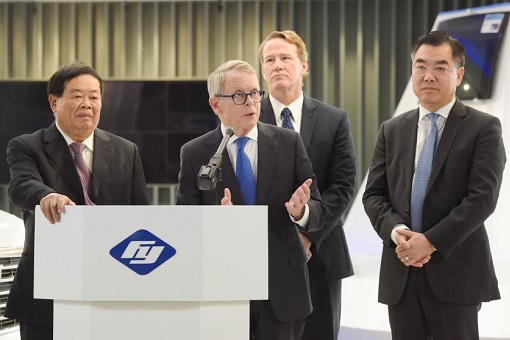
In July 2024, agents from Immigration and Customs Enforcement, FBI (Federal Bureau of Investigation), Internal Revenue Service and Border Patrol, as well as state and local police, raided the Fuyao plant and more than a dozen affiliated businesses. They were accused of importing workers for the auto-glass industry and provided them housing in family-style hotels and transportation to and from the Fuyao facility and other factories.
The affiliates were formed, according to the complaint, to “conceal the multi-million-dollar income generated as a result of the business owners conspiring to harbour, transport, and employ a workforce made in part of illegal aliens.” Some of the employees told law-enforcement agents they were trafficked across the U.S.-Mexico border, the complaint said.
Nearly all of Fuyao’s employees had documentation showing they were legally permitted to work in the U.S. The company received 33 H-1B visas in the federal fiscal year 2025 for its Ohio facilities, government records show, about 1% of its local workforce. Zhang, the Fuyao spokeswoman, said all employees at Fuyao were authorized to work in the U.S., and the company has since beefed up the vetting process for new hires among its suppliers.
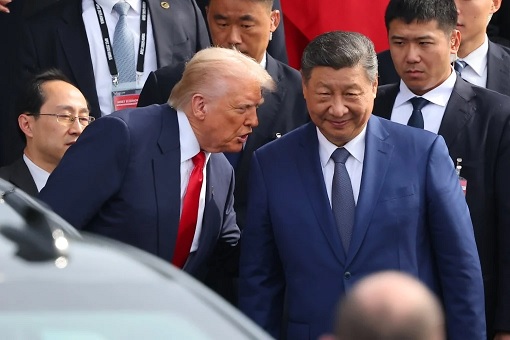
“If they want to come in and build a plant and hire you and hire your friends and your neighbors, that’s great, I love that,” – Trump said during remarks at a Jan. 13 meeting of the Detroit Economic Club. “Let China come in.” Hilariously, while Trump welcomes Chinese investments, he did not want ally such as Canada to do the same, threatening Ottawa with 100% tariffs if it it follows through on a trade deal with Beijing.
Sen. Bernie Moreno (R., Ohio) wants to see the Fuyao plant under new ownership. Sen. John Husted (R., Ohio), who attended a 2020 celebration marking an expansion of the Fuyao factory while he was state lieutenant governor, said he was concerned about the trafficking allegations. Bryce Burchett, the UAW union chair at the Vitro factory in Crestline, said – “If we had everything they had, then we would be able to match them on price. But right now, we can’t.”
Other Articles That May Interest You …
- Project Vault – Trump Copying China’s Critical Minerals Strategy
- Strategy Shift – Trump’s Decoupling Europe Rather Than China
- Adding Fuel To Fire – Why Russia Cheers Trump’s Greenland Grab
- Colonizing Greenland – With Friends Like U.S., Who Need Enemies
- US Soybean Farmers Panicking – China Not Buying, Trump Has To Bailout
- SCO Summit – U.S. Terribly Upset Over Car Rides, Hand-Holding & Jokes Sharing Between Xi, Putin And Modi
- China Too Strong For U.S. – Why Europe In Trouble As Trump Shifts Target To Bully EU With 50% Tariff Threats
- Trump Has Already Lost His Trade War Against China – But He Can’t Find Ways To Climb Down And Save Face
- Pawns Europe & Ukraine Got Played – The Hidden Message Behind US-Russia Talks In Saudi Without Allies
- China Secretly Hiding Tonnes Of Gold – The Buying Spree In Preparation Of Trade War, Sanctions Or Even Invasion Of Taiwan
- Biden Blinked – Huawei CFO Sabrina Meng Returns Home, US-DOJ Dropped Extradition Request

|
|
February 10th, 2026 by financetwitter
|


|

|

|

|

|

|















Comments
Add your comment now.
Leave a Reply