



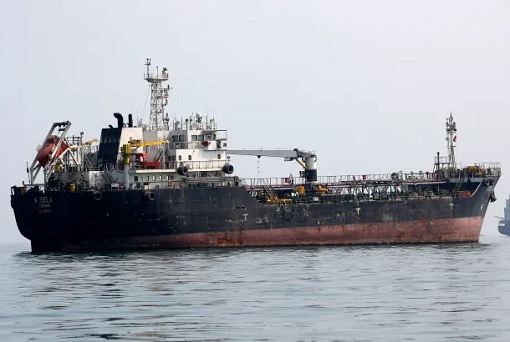
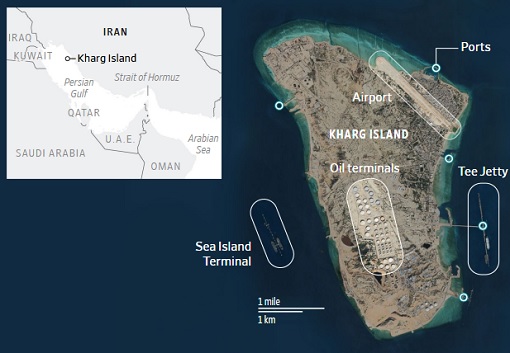
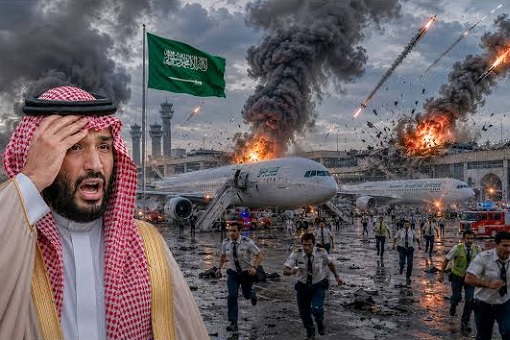
Brent, the international benchmark, jumped above US$99 a barrel on Tuesday (Sept 8) – the highest since July – after Iran-backed Houthi militants in Yemen conducted strikes on energy infrastructure in Saudi Arabia. The oil prices also jumped as a result of retaliation from the U.S. that destroyed four Iranian tankers in the Gulf of Oman and one near Kharg Island, where Iran exports a majority of its oil.
“Iran has used the tankers as part of a multibillion-dollar shadow network that funds the IRGC and its regional proxies,” Centcom (U.S. Central Command) said, referring to the Islamic Revolutionary Guard Corps. Iran later fired missiles at U.S. forces in Jordan, and the IRGC said in a statement that it was targeting jet fighters staged at the Muwaffaq Salti air base.
Since Friday (Sept 4), Iran has fired ballistic missiles at a U.S. aircraft carrier, Navy destroyers and at least one Marine ship. Even though all the attacks have failed, Iran’s bold attempts to hit American naval assets are raising alarms that the regime is using more sophisticated weapons and could be getting assistance tracking the warships from China, Russia or both.
The attacks highlight Iran’s willingness to go on the offensive as the U.S. blockade of Iranian ports weighs on the country’s economy. Iranian officials have claimed they are using new missiles with advanced features to target the American warships. Such missiles could have electro-optical seekers, enabling them to maneuver toward a moving target using imagery, weapons analysts say.
However, Iran would still need to know the approximate location of U.S. warships when its attacks began, raising concerns that China and Russia could be helping Iran track the locations of American warships. In May, the U.S. sanctioned China-based entities for providing satellite imagery to Iran during the war. China has every reason to help Iran – to learn the U.S. strategic and tractical response, and to find vulnerabilities.
The fact that Iran is able to target warships at all after the U.S. degraded its ability to see the battlefield is a key concern, according to retired Vice Adm. John “Fozzie” Miller, who commanded U.S. naval forces in the Middle East. “They don’t really have the capacity to reach out and find someone out in the Arabian Sea on radar any longer,” – he said.
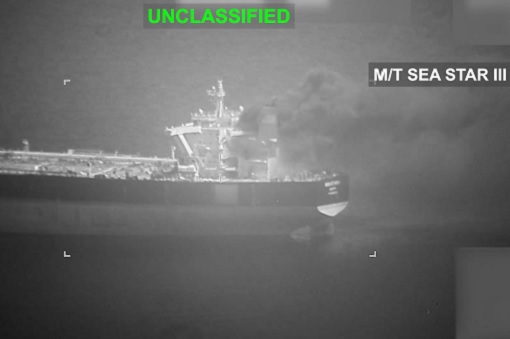
The next Wednesday morning (Sept 9), oil prices finally hit the US$100 mark after the U.S. destroyed five more Iranian crude tankers and Iran targeted U.S. forces in Jordan. These latest attacks appear to be a continuation of the policy Admiral Brad Cooper outlined on Saturday when he said – “If you shoot at two of our ships, we will impose an even higher economic cost – taking out three of yours.”
Brent is up more than 60% this year, and has risen above the US$100 mark for three periods so far in 2026. In the first weeks after the first US-Israeli attacks on Iran in late February, oil prices soared past US$100 a barrel and peaked at US$126 in April during the conflict but later fell back amid hopes of a ceasefire in the region. The price then began to climb again after a memorandum of understanding between the U.S. and Iran fell apart.
Washington hopes that the blockade and economic sanctions will bring the Iranian regime to its knees, but so far, the regime has refused to back down and is stepping up threats against U.S. Navy vessels. The U.S. has 19 warships supporting operations in the Middle East. By striking Iranian tankers, the U.S. aims to further punish Tehran and crack down on the regime’s ability to ship oil and fund its weapons programs.
While civilian ships – merchant ships, container ships, fishing boats, and passenger liners – aren’t typically lawful targets, they lose their protected status if they contribute to an adversary’s military action such as direct participation in hostilities, carrying military goods or troops, intelligence gathering, refusing interception, or breaching a blockade.
Iran’s strategy is obvious – escalate the conflict by targeting U.S. mighty warships to push up oil prices, spook the stock markets, damage Trump administration as the U.S. heads into midterm elections, spike the inflation, and bring down American economy. However, in the midterm elections on Nov. 3, U.S. President Donald Trump will not be on the ballot. He doesn’t really care about elections that won’t affect his power.
And unlike previous Tehran’s escalations where Iran had benefited from higher oil prices, where its tankers could still sell oil to China, this round it has nothing to gain if Trump – calling Iran War as “small potatoes” – continues to respond aggressively. No Iranian crude has crossed the blockade since it was reinstated by the U.S. Navy in mid-July, according to ship tracker Kpler.
Yes, Iran’s oil export revenue is drying up as a U.S. naval blockade strangles shipments from the Persian Gulf and offshore stockpiles feeding China dwindle, putting more pressure on Tehran’s already battered economy. While Iran is still loading small amounts of oil onto tankers, those barrels remain trapped inside the Gulf thanks to the U.S. blockade.
The volume of Iranian crude already on vessels outside the blockade – a trove that is still generating revenue for Tehran – has fallen to around 29 million barrels from around 90 million barrels in mid-July and could run out next month. This is another reason why Tehran thinks it has nothing to lose by retaliating, therefore, hitting the U.S. Navy warships.
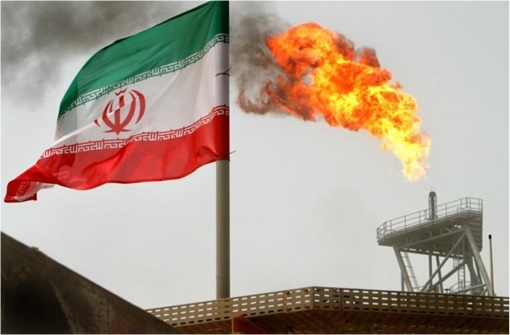
But six months into the war, the oil squeeze is depriving Tehran of its main source of foreign currency as the value of the Iranian rial plunges, inflation soars and the economy slides deeper into crisis. Roughly a third of Iran’s state budget is funded by oil revenue. Oil sales also directly help finance the regime’s military. This is the regime’s Achilles’ heel.
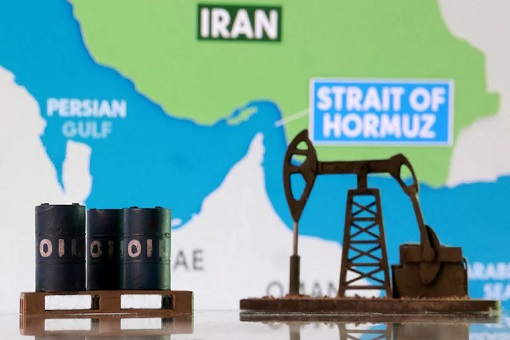
The U.S. Treasury says the armed forces, including the Islamic Revolutionary Guard Corps, use dedicated companies and shadow-fleet networks to sell crude and supplement their budgets. Iran loaded 255,000 barrels a day on vessels inside the Gulf in August, 85% below the February-April average. Those newly loaded barrels remain trapped behind the blockade line and haven’t made their way toward buyers.
The diplomatic effort to end the war that led to a memorandum of understanding (MOU) between the U.S. and Iran in mid-June, including a weekslong pause in the blockade, allowed Tehran to move substantial volumes of oil overseas for later delivery. The country is still living off the profit from those barrels. But now that lifeline is disappearing fast.
Kpler, a Brussels-based commodity and maritime data intelligence platform, estimates that current deliveries of around a million barrels a day – which mostly go to China – could exhaust the store of Iranian oil on the water by mid-October. Worse, payments for previously delivered cargoes would likely dry up by mid-December.
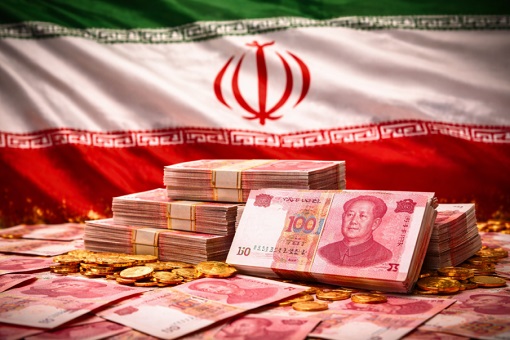
Even those payments could become harder to collect. Sanctions under Washington’s new economic pressure campaign are targeting banks and other financial channels that facilitate Iranian transactions. As a result, some Chinese buyers are turning to Saudi, Iraqi and United Arab Emirates crude, Gulf energy officials said. In some cases, Iranian oil now costs refiners more than competing supplies due to its relative scarcity.
It was already bad that Iraq has offered discounts of nearly US$30 a barrel on some grades. It becomes worse when the U.S. blockade is forcing Iran to cut some production. Oil stockpiles haven’t risen much, suggesting Iran has brought its output down closer to what it needs at home – cutting output to keep its backed-up oil from hitting the “tank tops” of available storage.
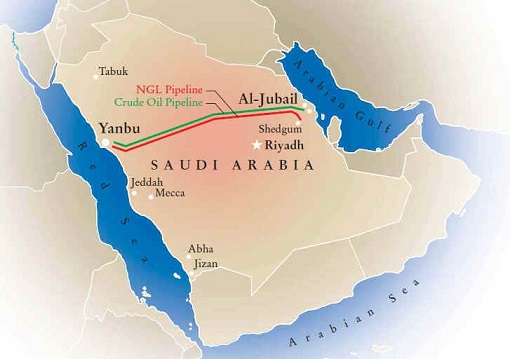
Unlike Saudi Arabia, overland routes offer little relief to Iran. It is only possible to move small amounts of oil by truck or rail compared with seaborne exports, and Iran mostly lacks wagons designed for crude or refined products. Iran could move no more than 40,000 barrels a day via trucks, a sliver of its prewar exports of close to 2 million barrels a day.
The pressure extends to petrochemicals. The sector, Iran’s second-largest source of foreign-currency earnings after oil, also depends heavily on seaborne exports. By August, loadings had fallen by about two-thirds from early 2026, Kpler estimates. By contrast, other Gulf producers have kept significant volumes flowing despite the conflict, with the U.S. guiding convoys through the Strait of Hormuz.
The Iranian export squeeze is deepening the economic crisis in a country where official inflation is running at more than 80% year-over-year. The International Monetary Fund (IMF) forecasts a 5.4% economic contraction this year, the country’s worst since the 1980s. Falling exports deprive Tehran of the hard currency it needs to support the rial and pay for imports, including raw materials for factories – making imports more expensive and fuels inflation.
Sure, Iran’s overall trade hasn’t stopped entirely. The regime exported nearly US$15 billion of non-oil goods between mid-March and mid-August, according to Iranian media. But a major commercial gateway has recently narrowed. Official trade through the U.A.E. has largely stopped after the country said last month it would suspend financial and economic transactions with Iran.
Other Articles That May Interest You …
- Calm Before The Storm – Iran’s Secret Plan To Escalate The War
- Trump, Truck & Decoy Plane – The Ruse To Evade Iran Threat
- Why Iran Thinks It Has All The Cards To Check-Mate Trump
- No More Safe Havens – Israel’s Airstrike In Qatar Sends New Message To Countries Harbouring Hamas Terrorist
- Paying The Price For Hamas Attacks – How Trump Misled Iran Before Israel Sends 200 Jets To Attack
- Ran Out Of Luck And Place To Hide – Here’s How Israel Trainee Squad Accidentally Killed Hamas Mastermind Sinwar
- Playing A Dangerous Game – Here’s Why Facebook Removes News Of PM Anwar Meeting With Hamas Terrorists
- Hamas Is Game Over – How The Terror Group Miscalculated, Betrayed, Abandoned And Made More Mistakes
- Human Shields – How Hamas Cleverly Wins Propaganda War, But Was Stunned By “Fire Power” Unleashed By Israel
- Told You So!! – Congrats To Anwar For Radicalizing School Kids As Potential Hamas Terrorists Playing With Guns
- An Eye For An Eye!!! – No One Can Stop Israel From Reducing Gaza To Rubble And Erase Hamas Terrorists

|
|
September 9th, 2026 by financetwitter
|


|

|

|

|

|

|





















Comments
Add your comment now.
Leave a Reply