



Houthi militants have claimed attacks on two Saudi tankers in the Red Sea, threatening another important route for oil flows and stoking fears that the U.S.-Iran conflict could escalate further. As a result, oil prices jumped back to US$100 a barrel on Thursday before retreating, fueling a bond selloff and sending stocks sliding. Brent Crude futures jumped 6% – more than US$25 higher than where they were in early July.
That was enough to push up government bond yields around the world, with the 10-year Treasury yield touching 4.711% momentarily on Thursday before easing, surpassing its previous 2026 intraday high of 4.687% set in May. While bond yields have climbed steadily since the collapse of the U.S.-Iran ceasefire in late June, yields took another leg up after Houthi militants claimed the latest attacks.
Investors were worried that the resulting jump in energy prices could push the Federal Reserve to raise interest rates in the coming months. This could lead to higher borrowing costs,lower consumer spending, andslower economic growth. Higher borrowing costs could lead to reduced corporate profits, which in turn could depress stock prices.
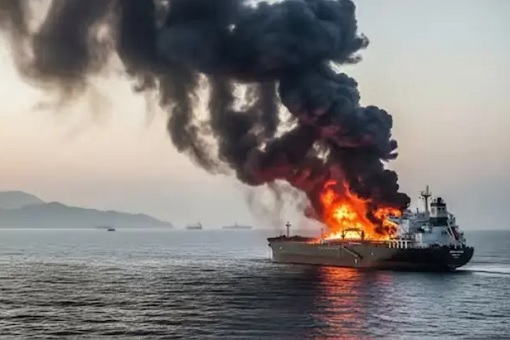
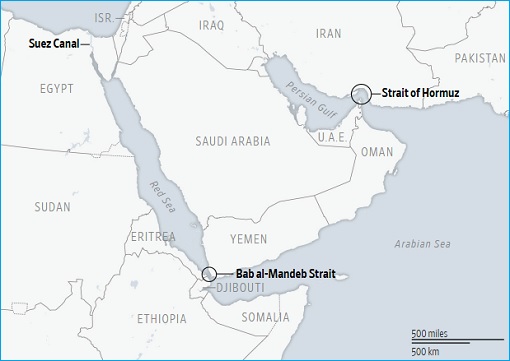
At least one oil tanker was hit trying to cross the Bab al-Mandeb strait, the Red Sea chokepoint that accounted for roughly 12% of the world’s seaborne oil flows before the war. When this strait that connects the Red Sea to the Indian Ocean is shut, vessels can still get to customers in Asia. But this requires a massive detour through the Suez Canal and around Africa, adding 10 to 15 days to the journey.
But that was not the only problem. When fully loaded, the biggest tankers sit too deep in the water to pass through Suez. Shippers would have to operate supertankers on partial loads. These longer and less efficient journeys will tie up more tanker capacity and push up shipping costs for Asian refiners. It was already bad that Iran was choking the Strait of Hormuz. It becomes worse when Iran proxy now is threatening the Bab al-Mandeb Strait.
However, not everyone is subject to Houthi militants’ naval blockade in the Red Sea. On Thursday, two Chinese supertankers, Xin Long Yang and Cosnew Lake, loaded with a combined 4 million barrels of oil from the Saudi Aramco-ExxonMobil Refinery at the port of Yanbu made a dash towards the Bab al-Mandeb strait and crossed the chokepoint.
Both vessels are owned by a subsidiary of the Chinese state-owned Cosco Shipping, and chartered by the international trading arm of Chinese oil major Sinopec. Both broadcast their destinations as “Chinese crew & owner” as they sailed, a common tactic used by vessels to signal their Chinese affiliations. Earlier this week, Iran-backed Houthi militants in Yemen threatened to impose a naval blockade on Saudi Arabia.
Despite the threats, traffic through Bab al-Mandeb has held up. Ship tracker Kpler recorded 43 crossings through the Red Sea chokepoint on Wednesday, a small increase from Tuesday. Transits through the Strait of Hormuz edged up to 15 on Wednesday, compared with just nine on Tuesday.
The conflict, which is now in its fifth month, shows little signs of ending. The U.S. Central Command completed the 13th consecutive day of strikes against targets in Iran on Thursday. Meanwhile, the U.S. is sending more forces, medics and weaponry to the Middle East to provide military options as President Trump considers expanding the conflict against Iran.
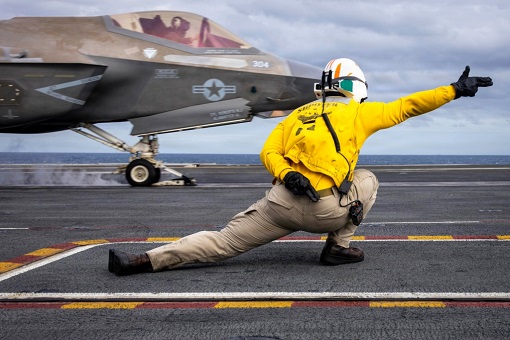
President Trump said he would hold Iran responsible for further attacks by Yemen’s Tehran-backed Houthis if the Houthis launch more attacks on Saudi vessels in the Red Sea. He also warned a “massive attack” is under consideration on Iran itself because Tehran has not “received enough pain yet”. While Trump did not give a deadline, he said Israel would join the operation.
Iran reportedly used private Iranian carrier Mahan Air to fly commanders from its powerful Islamic Revolutionary Guard Corps IIRGC), and equipment related to missiles and drones, to Yemen this month (July 13 – about week before the Houthis declared a blockade of Saudi Arabia and started harassing the kingdom’s vessels) to help bolster its Houthi allies’ ability to threaten global energy supplies in the Red Sea.
There are signs the U.S. is preparing to ramp up military operations in the Middle East, including an increase in the number of refueling aircraft deployed to Israel, American B-1 bombers leaving U.K. bases, and more than 150 medics being sent to a sprawling base in Germany. Preparations to receive additional patients are also underway at Walter Reed National Medical Military Center near Washington D.C.

“The United States signed an MOU with Iran and they broke it, shot at commercial ships, and killed American soldiers. President Trump is not going to stand by and allow this terrorist behavior to occur,” – White House press secretary Karoline Leavitt said. She added that Iran was paying for its behavior and would continue to pay “until they come to the table in what President Trump deems a meaningful way.”
However, oil, bonds, and stocks were not the only markets affected. The food industry is also being hammered. Futures tied to corn, soybeans and wheat have all surged this month – with wheat contracts yesterday crossing the US$7 a bushel mark to trade at their highest level in three years. Behind the rally lies a triple threat to global supplies.
Russia has intensified attacks on Ukraine’s Black Sea port of Odesa, targeting grain silos, port infrastructure and commercial vessels to cripple the country’s main export corridor. Meanwhile, continued conflict in the Middle East has choked the movement of fertilizer through the Strait of Hormuz. And on top of both conflicts are relentless heat waves around the world, which have threatened crop yields.

In fact, futures contracts for all three products aren’t nearly as high as they were back in 2022, when Russia’s invasion of Ukraine sent agricultural futures surging. The recent jump is worrying farmers and executives in the industry, who have warned recently about risks to food prices and the potential to exacerbate hunger among the world’s poor.
Heck, even a cup of coffee is beyond reach. Nestlé had to hike prices on its popular Starbucks-branded coffee pods in the U.S. this year because beans got so much more expensive. That curbed sales, at least temporarily, and contributed to lower-than-expected growth when Nestlé reported second quarter results on Thursday. Nestlé’s shares fell 6%.
Other Articles That May Interest You …
- Iran War Reveals How U.S. Sanction Was Easily Evaded Using Yuan
- No More Safe Havens – Israel’s Airstrike In Qatar Sends New Message To Countries Harbouring Hamas Terrorist
- Paying The Price For Hamas Attacks – How Trump Misled Iran Before Israel Sends 200 Jets To Attack
- Ran Out Of Luck And Place To Hide – Here’s How Israel Trainee Squad Accidentally Killed Hamas Mastermind Sinwar
- Live By The Sword, Die By The Sword – Anwar Madly Angry After BFF Hamas Terrorist Leader Haniyeh Assassinated
- Playing A Dangerous Game – Here’s Why Facebook Removes News Of PM Anwar Meeting With Hamas Terrorists
- Hamas Is Game Over – How The Terror Group Miscalculated, Betrayed, Abandoned And Made More Mistakes
- Careful What You Wish For – U.S. May Slap Economic Sanction On Malaysia For Supporting & Training Hamas Terrorists
- Human Shields – How Hamas Cleverly Wins Propaganda War, But Was Stunned By “Fire Power” Unleashed By Israel
- Told You So!! – Congrats To Anwar For Radicalizing School Kids As Potential Hamas Terrorists Playing With Guns
- An Eye For An Eye!!! – No One Can Stop Israel From Reducing Gaza To Rubble And Erase Hamas Terrorists

|
|
July 24th, 2026 by financetwitter
|


|

|

|

|

|

|




















Comments
Add your comment now.
Leave a Reply